Trip in
 Here is the first thing to understand about Brazilian food: there is no such single thing. A country larger than the contiguous United States, stitched together from Indigenous kitchens, West African flavors carried across the Atlantic, Portuguese pantries, and waves of Italian, Japanese, German, and Lebanese arrivals, does not produce one cuisine.
It produces a continent of them. The black-bean feijoada of Rio bears almost no resemblance to the coconut-and-palm-oil moqueca of Bahia, which in turn has nothing to do with the fire-roasted beef of the southern pampas. To eat across Brazil is to travel through history with a fork.
I live in Rio, I have spent years pointing travelers toward the right stall and the right hour, and I am going to do the same for you here. Below are fifteen dishes and drinks you genuinely have to try, but more than a list, this is a map of why they exist, where to find the real version, and exactly how a Brazilian eats them so you don't give yourself away as a tourist. Bring an appetite and a little curiosity. Both will be rewarded.
A quick map of Brazilian flavor
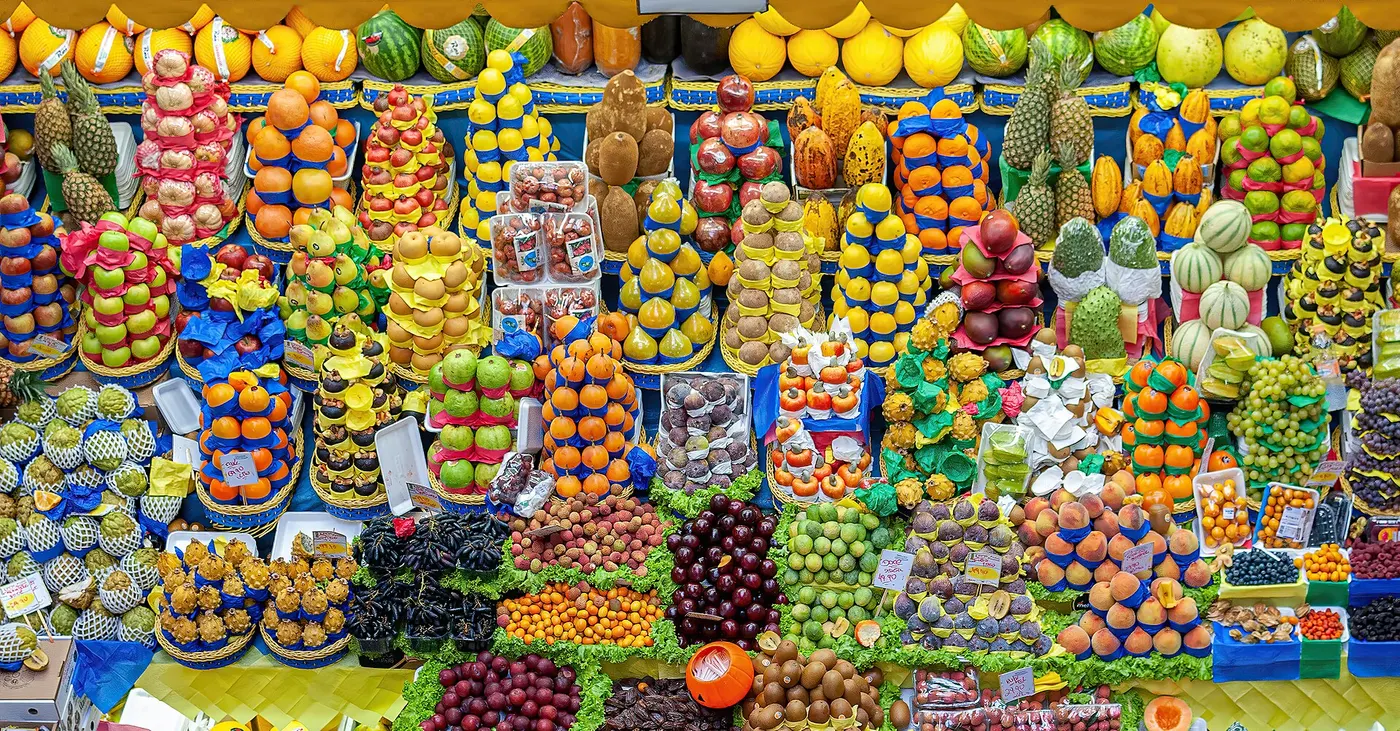
Before the dishes, the lay of the land, because geography is destiny on a Brazilian plate. The Northeast, anchored by Bahia, is the most African-influenced kitchen in the Americas: palm oil, coconut milk, dried shrimp, fierce chilis. The North, the Amazon basin, especially Pará, is its own universe of river fish, cassava in a hundred forms, and fruits most of the world has never tasted.
Minas Gerais, the mountainous interior, is the comfort-food heartland: cheese, pork, beans cooked over wood fire. The South is cattle country, where the gaúcho churrasco was born. And the great cities, São Paulo and Rio, are where all of it collides, plus the world's largest Japanese diaspora outside Japan and a colossal Italian-Brazilian population that made São Paulo a pizza city to rival any.
Keep that compass in your head as we eat. When you understand where a dish comes from, it tastes better. That's not romance, it's just true.
Want a trip planned around the food, feijoada in Rio, moqueca in Bahia, açaí in the Amazon? We're a local team in Rio and we love this.
Plan my trip on WhatsApp1. Feijoada, the national dish (and its origin debate)
If Brazil has a single edible flag, it's feijoada: a deep, slow-simmered stew of black beans and cuts of pork, served with white rice, sautéed collard greens (couve), toasted cassava flour (farofa), and slices of orange to cut the richness. It is heavy, it is glorious, and it is a project, Brazilians eat it for lunch, typically on Wednesdays and especially Saturdays, and then surrender the rest of the day to a nap.
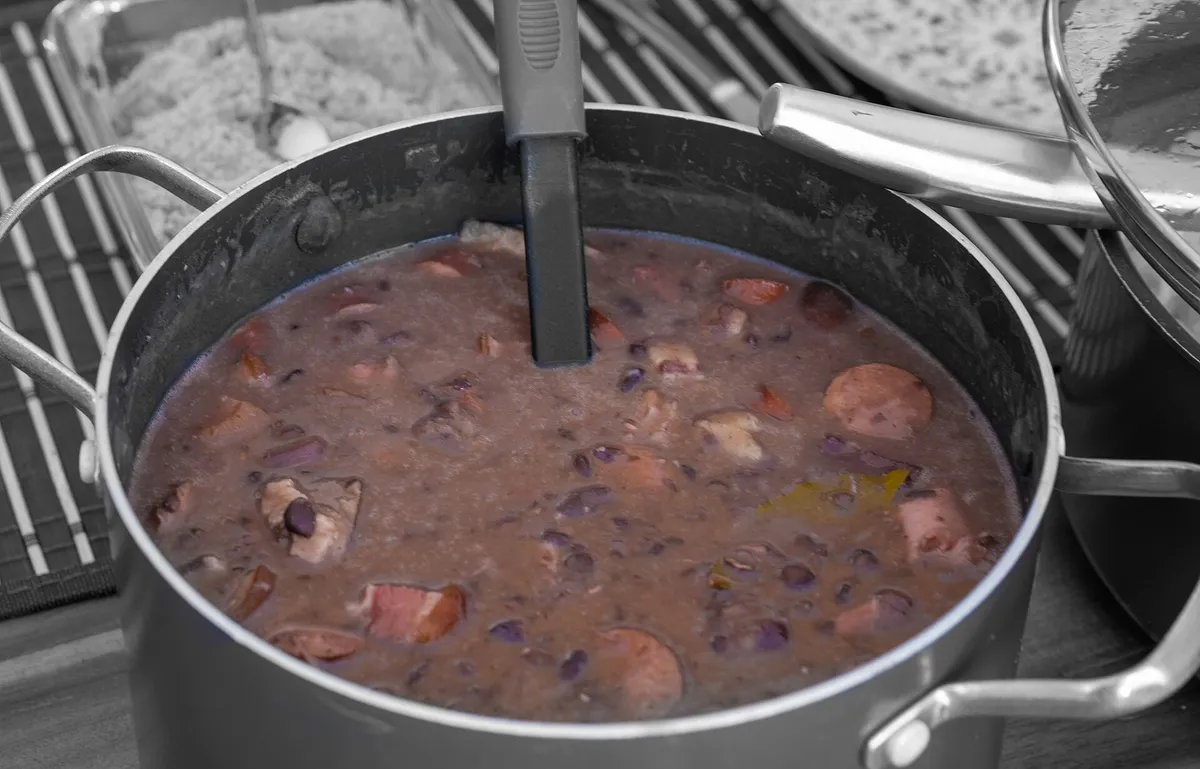
Now, the story. You'll often hear feijoada described as "slave food", a dish invented by enslaved Africans from the pork scraps their enslavers discarded. It's a powerful narrative, but food historians increasingly push back on it as romanticized myth rather than documented fact.
Bean-and-meat stews are ancient across Portugal and Europe, and the pricier cuts in a traditional feijoada were never cheap leftovers. What's not in dispute is that feijoada as Brazil knows it took root in the 19th century and became, over time, the country's defining comfort meal. The debate itself tells you something: Brazilians take this dish seriously enough to argue about its soul.
Insider tip
Go for feijoada at lunch, not dinner, that's when restaurants make it fresh, and your body will thank you for not eating it at 9pm. And don't skip the orange slices; they aren't decoration, they're digestion. Pair it with a caipirinha or an ice-cold beer and pace yourself.
2. Pão de queijo, Minas Gerais in a warm little ball
Bite into a good pão de queijo and you get a crackly shell giving way to a stretchy, cheesy, almost gummy interior, a texture that exists nowhere else because it's built on cassava starch (tapioca flour), not wheat. That makes it naturally gluten-free, a happy accident of history. These cheese breads hail from Minas Gerais, and the most plausible origin story ties them to the colonial era, when wheat was scarce and expensive inland but cassava and local cheese were everywhere.
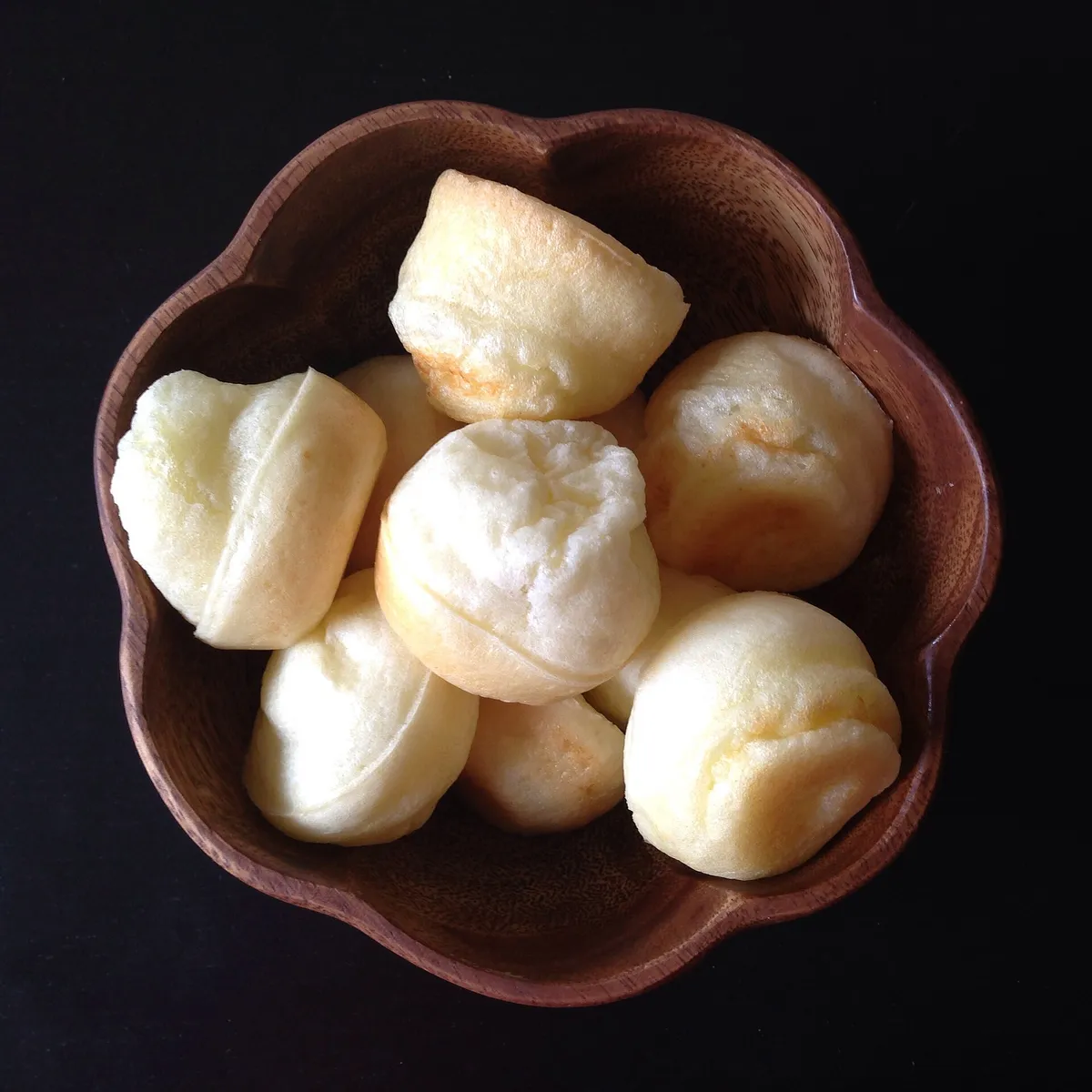
They're a national breakfast staple now, found at every bakery (padaria) and airport in the country. The cardinal rule: eat them warm. A pão de queijo cooling on a counter is a tragedy in miniature. If you find a padaria pulling a fresh tray from the oven, abandon your schedule.
3. Coxinha, the teardrop of comfort
The coxinha ("little thigh") is Brazil's beloved bar snack: shredded chicken, often bound with the soft cream cheese requeijão, wrapped in dough, shaped into a teardrop meant to mimic a chicken drumstick, breaded and deep-fried to a deep gold. It's the king of the salgados (savory snacks) you'll find in every botequim and bakery.
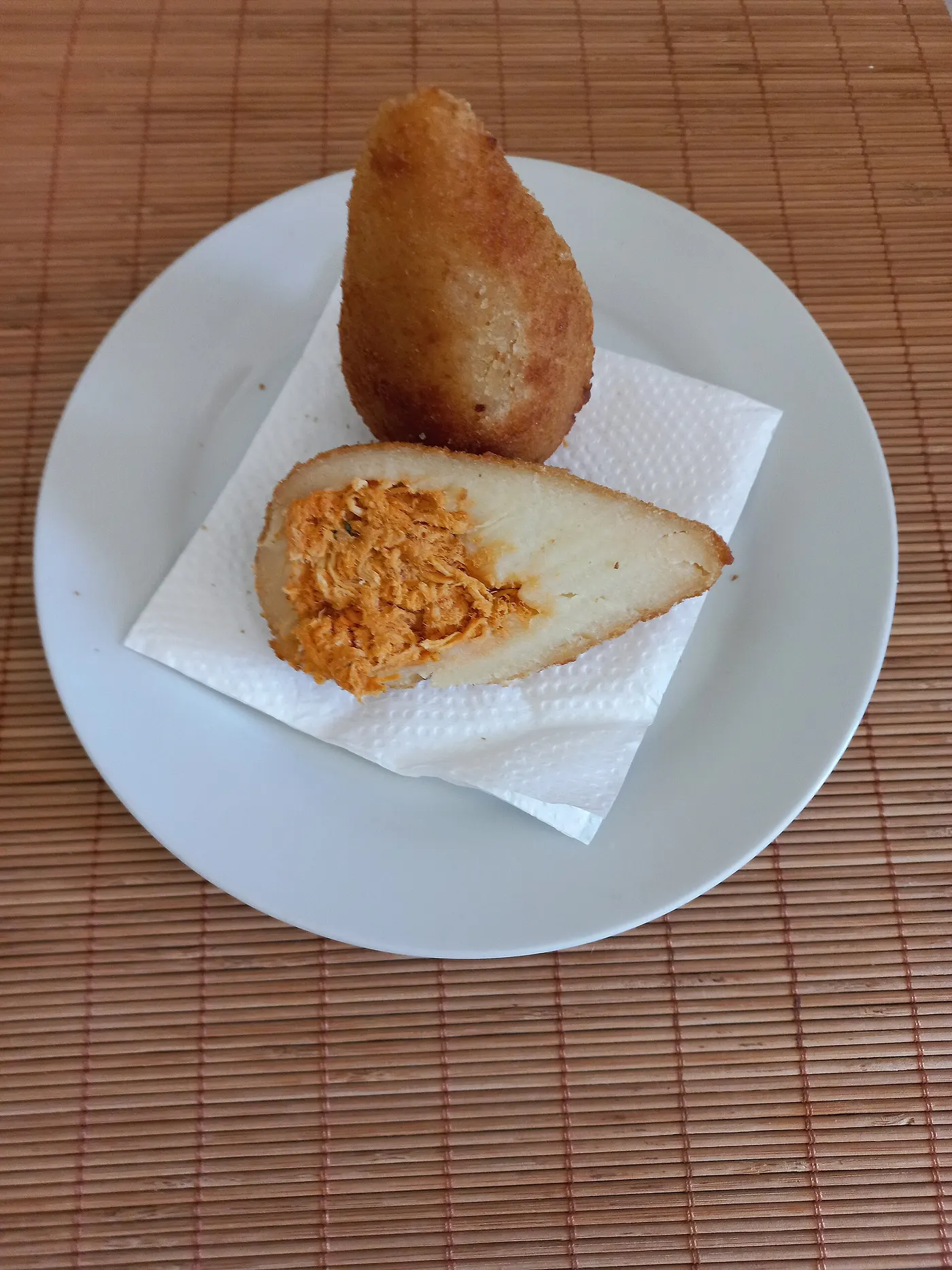
Order it at a counter, eat it standing, ideally with a cold beer in the other hand. It is the single most reliable thing to point a hungry first-time visitor toward, universally loved, available everywhere, and impossible to dislike.
4. Açaí, and why you're eating it wrong
Most travelers meet açaí as the sweet, frozen purple bowl topped with granola and banana, a Rio beach and gym staple. Delicious, fine. But that is the southern, sweetened reinvention. In its homeland of Pará, in the Amazon, açaí is a savory staple food, eaten thick and unsweetened, often poured over fish or shrimp and scooped up with farinha (toasted cassava flour). For families across the Amazon it's not a treat, it's a daily source of calories and energy.
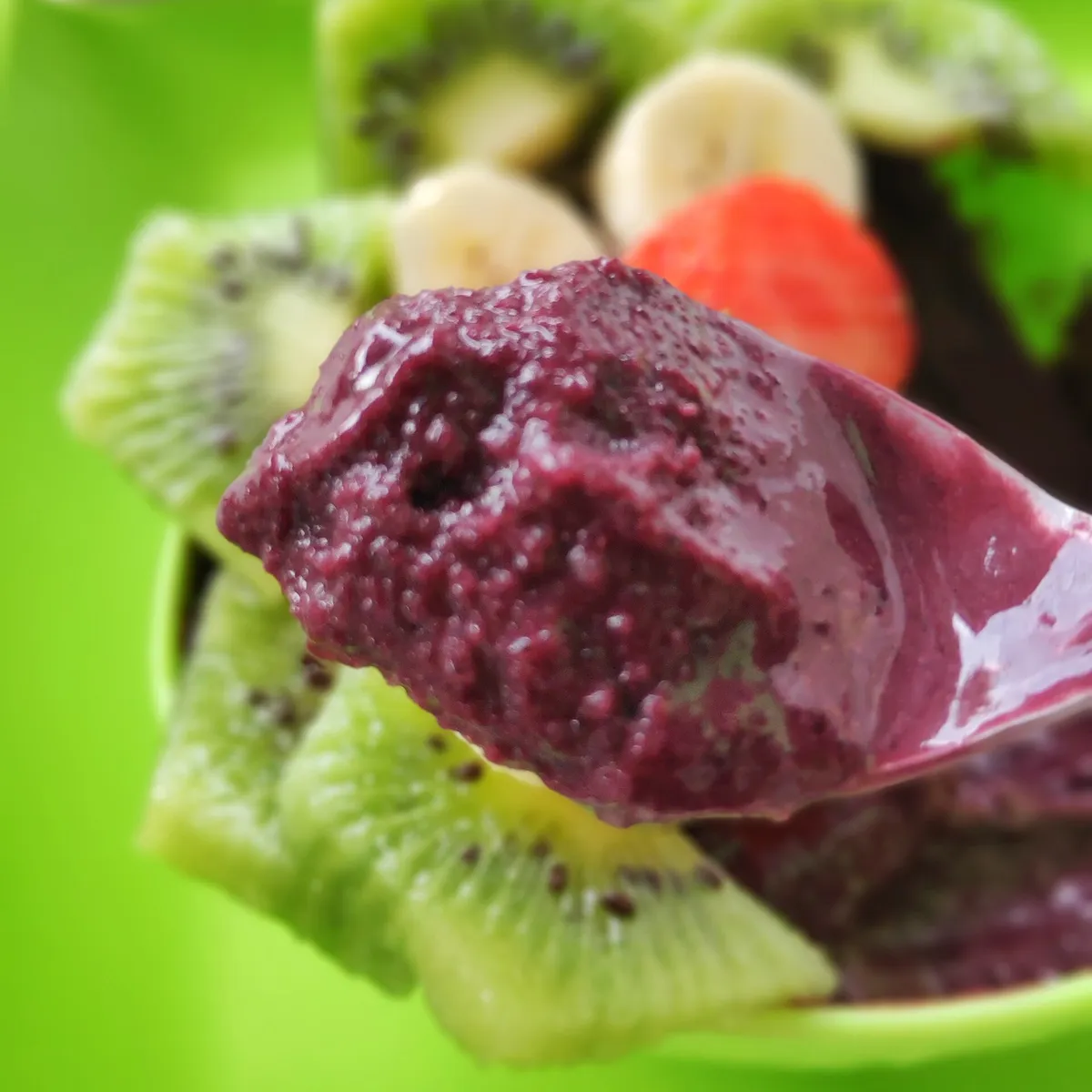
The berry grows on a tall palm and must be processed within hours of harvest, which is why the real, fresh version barely travels. If your Brazil itinerary reaches the Amazon, try it the Pará way at least once, it will rearrange your idea of what açaí even is. (Planning that leg is worth doing carefully; see our guide to visiting the Amazon rainforest.)
Insider tip
On a Rio beach, the açaí you want is the thick, spoon-standing kind from a quiosque, not the watery milkshake version. Ask for it "na tigela" (in a bowl) with banana and granola, and if you like it tart, request less guaraná syrup.
5. Moqueca, the rivalry that won't end
A moqueca is a fragrant fish-and-seafood stew, and it is the source of one of Brazil's most cheerful regional feuds. There are two camps. Bahia's moqueca baiana is rich and orange-red, built on coconut milk and dendê (red palm oil) brought across the Atlantic from West Africa, perfumed with coriander. Espírito Santo's moqueca capixaba is lighter, made without coconut milk or dendê, cooked in distinctive black clay pots, leaning on tomato, onion, and a touch of annatto for color.
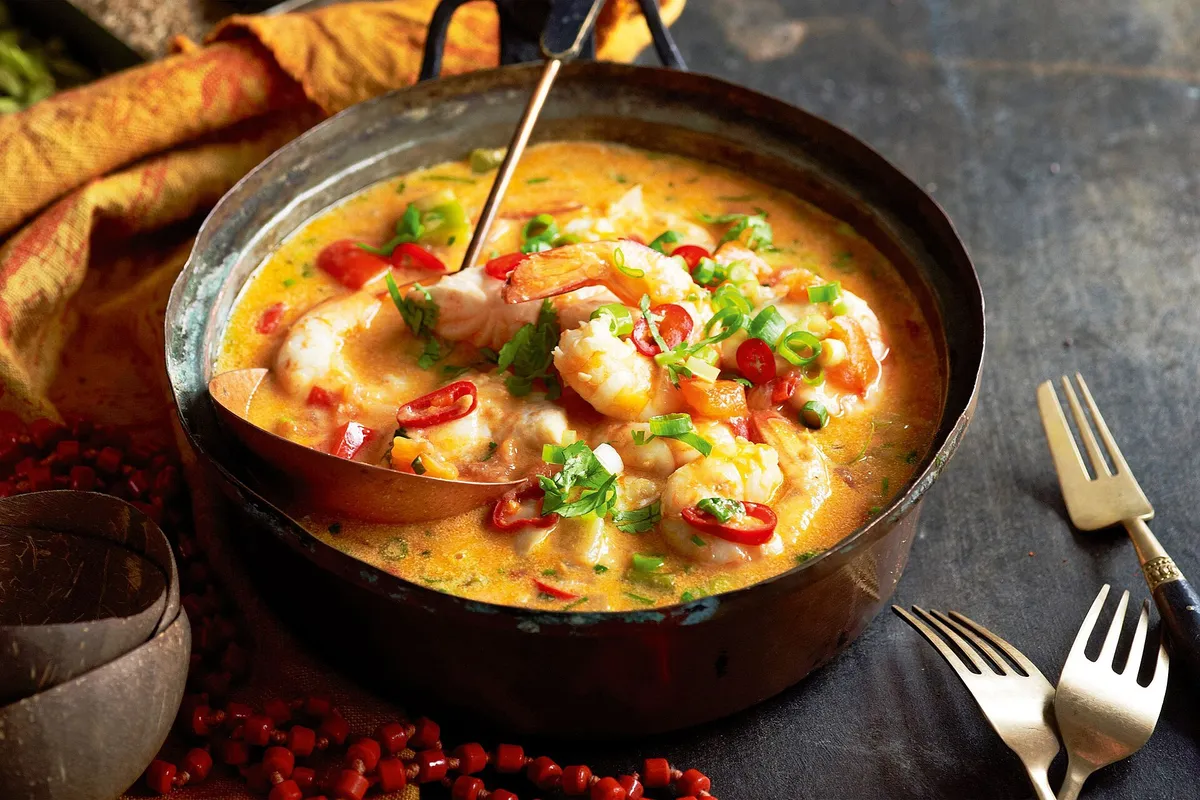
Ask a Baiano which is the "real" moqueca and then ask a Capixaba, and settle in, neither will concede. The honest answer is that they're different dishes with the same name and a shared Indigenous root (the word and the technique predate both versions). Try both if you can. The rivalry is half the fun.
To eat across Brazil is to travel through history with a fork, every dish carries an ocean crossing, a migration, or a kitchen improvised out of scarcity.
Bahia or Espírito Santo for your moqueca? We'll help you build a route that hits the regions whose food you most want to taste.
Plan my trip on WhatsApp6. Brigadeiro, the birthday-party legend
The brigadeiro is a fudgy little chocolate truffle made from condensed milk, cocoa, and butter, rolled into a ball and coated in chocolate sprinkles. No Brazilian birthday party exists without it. And it comes with one of the best-named origin stories in food.
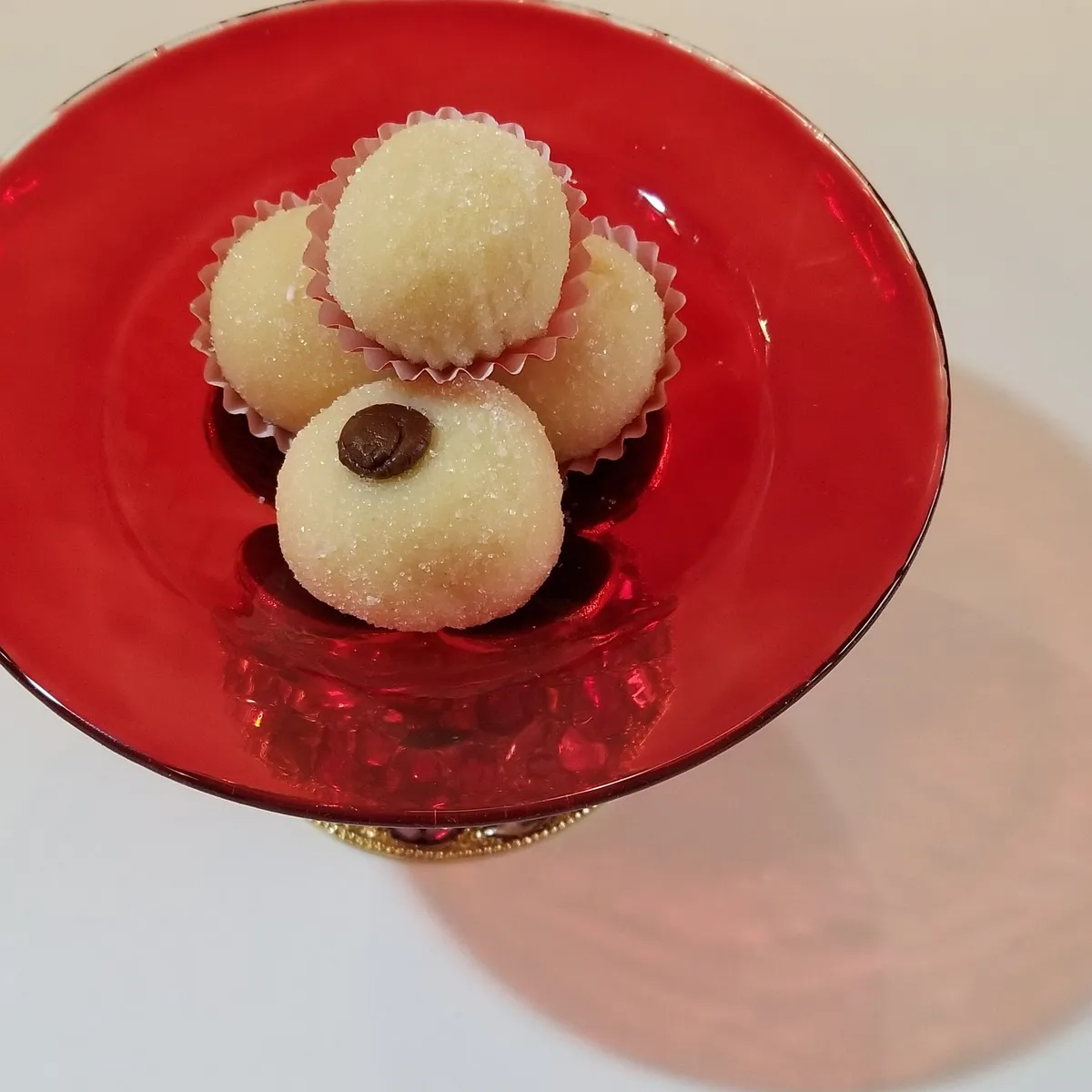
The sweet is named after Brigadeiro Eduardo Gomes, an air force brigadier who ran for president in the 1940s. The popular account holds that supporters, reportedly women campaigning for him, made and sold these condensed-milk chocolates to raise money and goodwill, and the candy took the candidate's military rank as its name. Gomes lost the election. The candy won eternity. Today it's so beloved that whole gourmet shops in Rio and São Paulo sell nothing else.
7. Picanha & churrasco, the gaúcho fire
Head south to Rio Grande do Sul and you enter the land of the gaúcho, the cattle-herding cowboy whose open-fire grilling tradition, churrasco, became Brazil's most exported food experience (those all-you-can-eat churrascarias worldwide are its descendants). The star cut is picanha: the rump cap, prized for the band of fat that bastes the meat as it cooks. Salted simply with coarse rock salt, skewered, and grilled over coals, it needs nothing else.
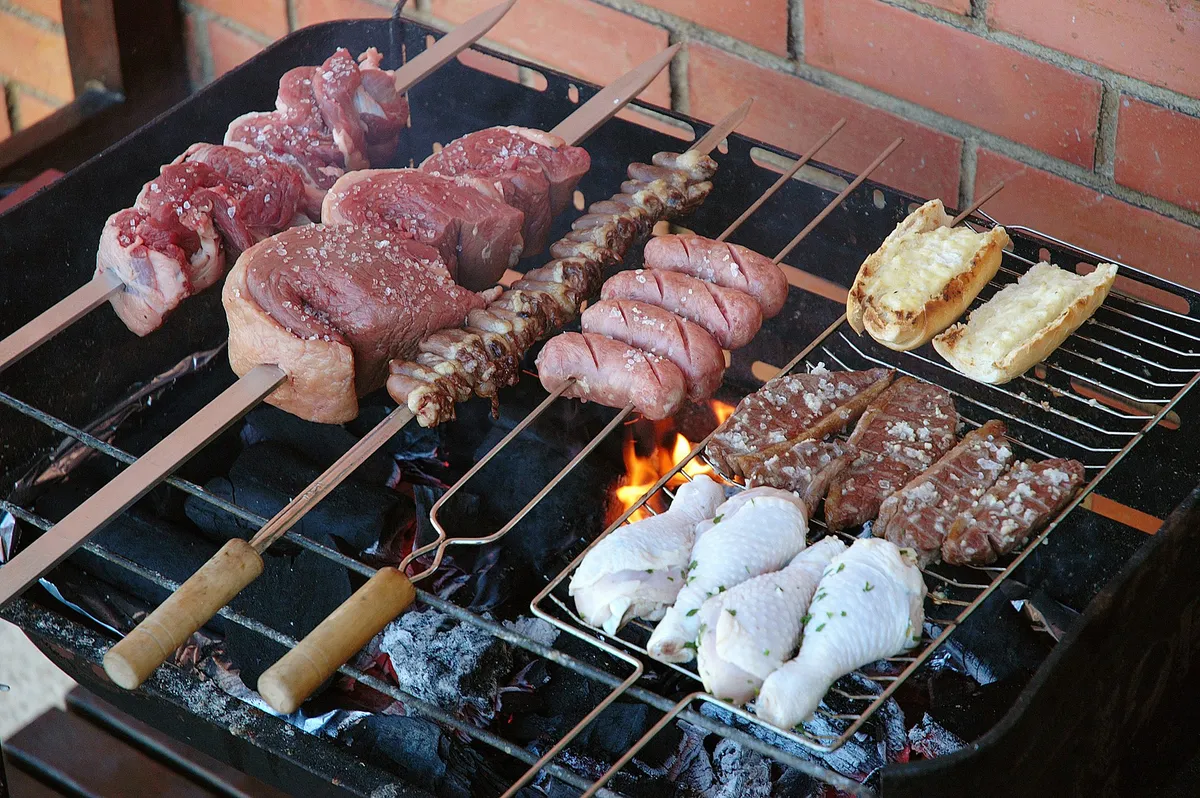
At a traditional churrasco the meat comes to you in waves, carved straight off the skewer onto your plate, until you flip your little card from green to red to signal mercy. Eat slowly, take the fattier cuts when offered, and treat the meal as the hours-long social event it's meant to be.
8. Pastel & caldo de cana, the feira ritual
This is the one I most want you to do, because it's where you'll actually feel Brazilian daily life. Go to a weekend feira (open-air street market) and order a pastel, a large, thin, deep-fried pastry pocket, blistered and crisp, stuffed with cheese, ground beef, hearts of palm, or the gloriously cheesy "pizza" version.
Wash it down with caldo de cana, raw sugarcane juice pressed in front of you through a clattering mechanical press, often with a squeeze of lime. The combination, hot greasy pastel, cold green-sweet juice, is a Brazilian rite of passage.
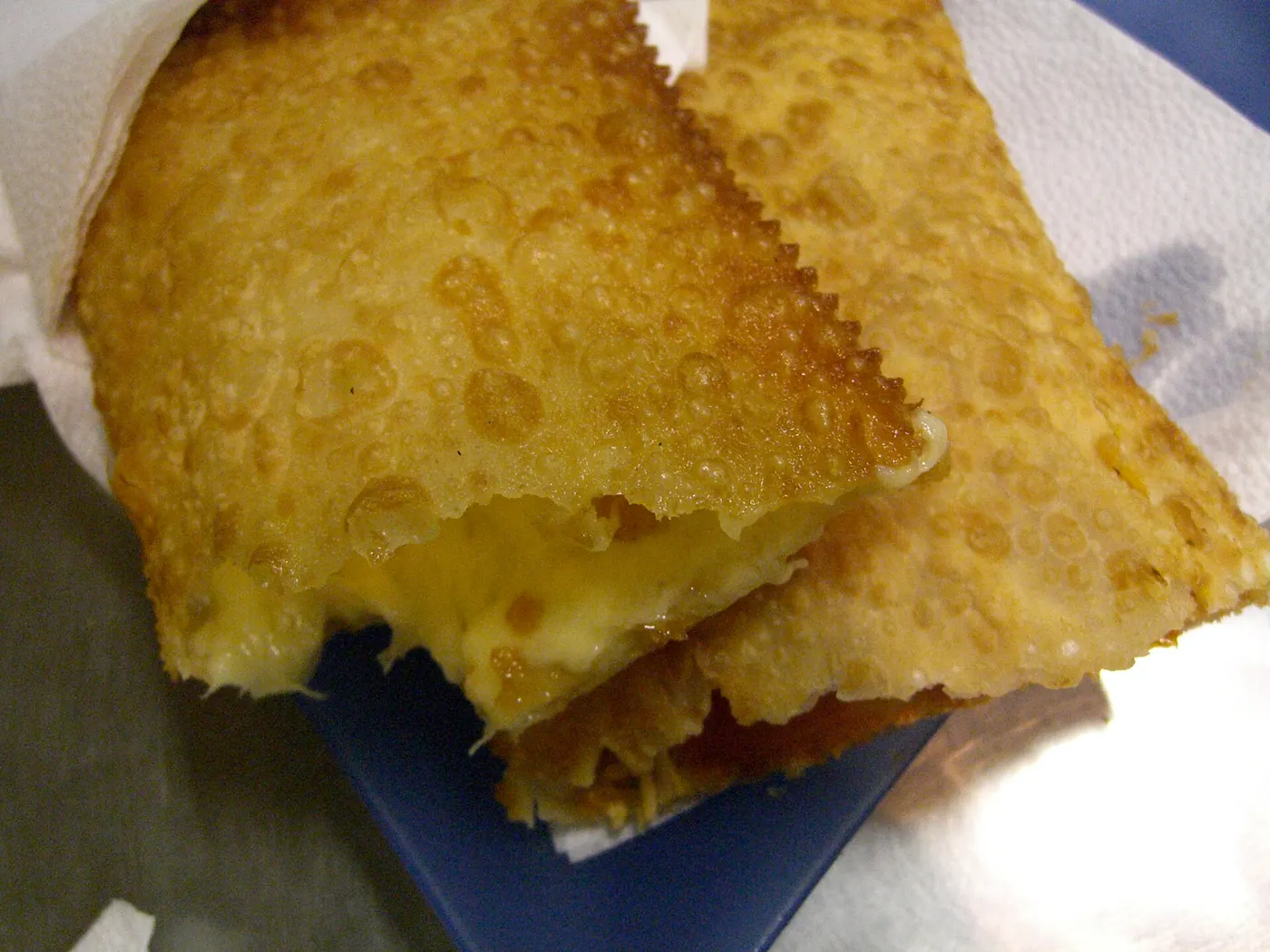
The pastel itself is widely believed to descend from Japanese and Chinese immigrant cooking adapted in São Paulo in the early-to-mid 20th century, a perfect example of how immigration rewrote the Brazilian menu. The feira is also the best place on earth to taste fruits you've never heard of, so ask the vendors for a slice. They love showing off.
Insider tip
Feiras run mostly in the morning and pack up by early afternoon. Go before noon, bring small cash, and don't fill up before you arrive, graze. For a Rio neighborhood with great feiras and markets, weave a food stop into one of our Rio day tours.
9. Acarajé, Bahia, faith, and dendê
In Salvador, the heart of Afro-Brazilian culture, you'll find women dressed in white lace, baianas, frying golden fritters at street stalls, and you must stop. Acarajé is a fritter of mashed black-eyed peas deep-fried in red dendê (palm) oil, then split and stuffed with vatapá, dried shrimp, and a fiery pepper sauce. It is one of the most direct edible links between West Africa and Brazil that you can taste anywhere.
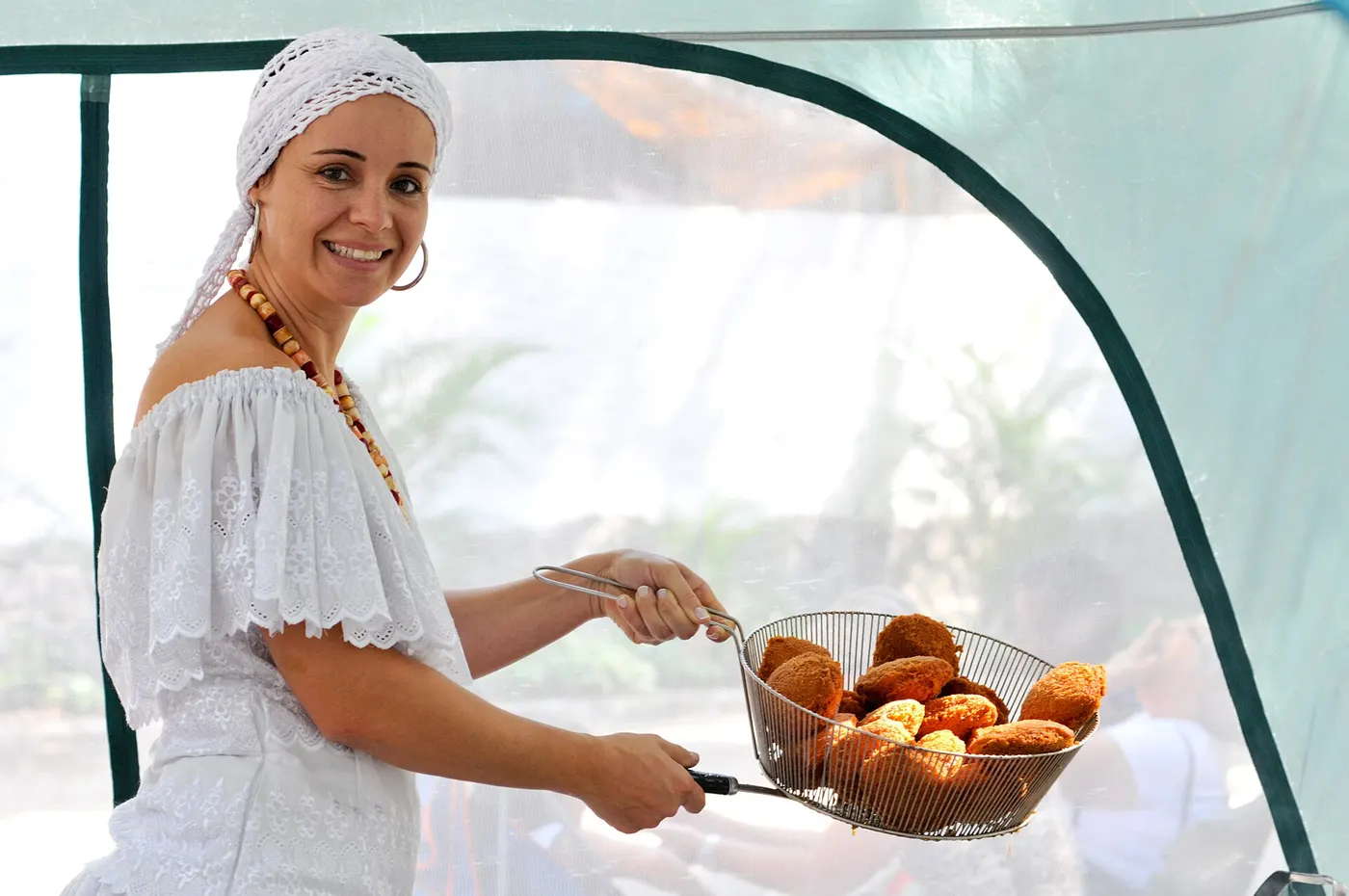
Acarajé is sacred as well as delicious: it has deep roots in Candomblé, the Afro-Brazilian religion, where it's associated with offerings to the orixá Iansã. The baianas who sell it are a recognized part of Brazil's cultural heritage. When the vendor asks if you want it "quente" (with the hot pepper sauce), say yes if you can handle heat, and be honest if you can't, because it is no joke.
10. Tapioca, ancient, simple, gluten-free
Long before Europeans arrived, Indigenous peoples were processing the cassava root into starch. Tapioca, in its crepe form, is the living result: cassava starch sprinkled onto a hot griddle, where it fuses into a soft, pliable white flatbread, then folded around fillings sweet or savory. Cheese and the savory side; coconut and condensed milk or banana on the sweet side; the combinations are endless.
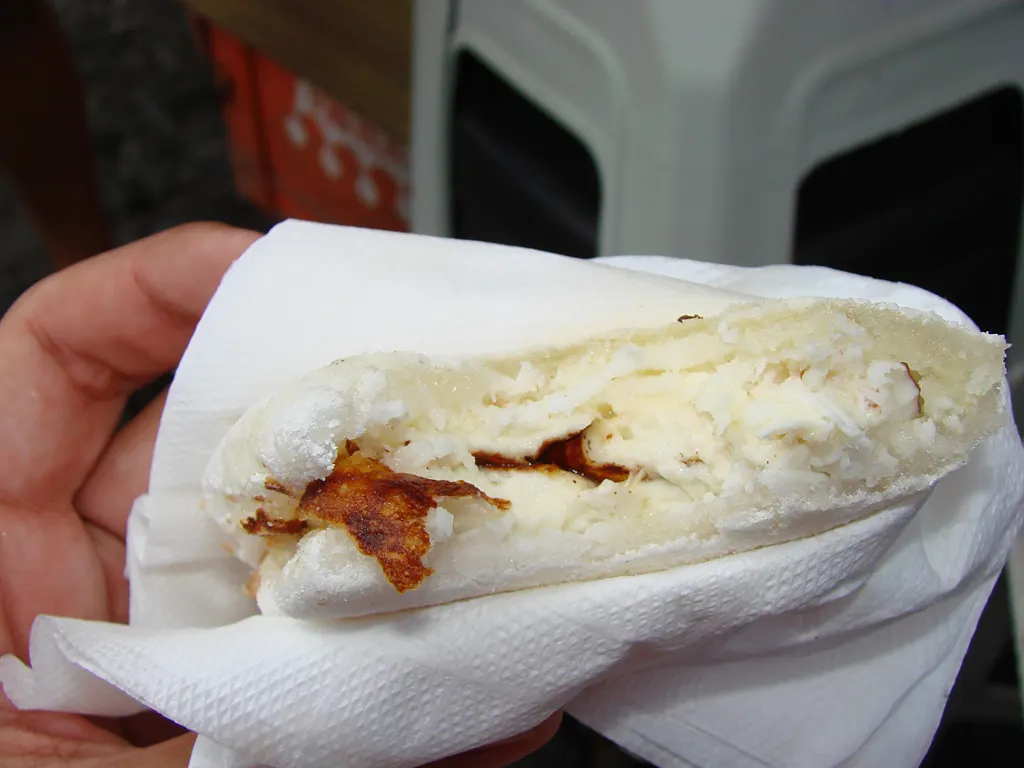
It's especially beloved in the Northeast, naturally gluten-free, and the kind of thing you can happily eat for breakfast one day and dessert the next. Watch it made at a feira stall, the transformation of loose powder into bread in under a minute never stops being a small magic trick.
11. Vatapá, the creamy soul of the Northeast
Vatapá deserves its own moment even though it often hides inside acarajé. It's a thick, savory cream of bread (or cassava flour), ground peanuts and cashews, coconut milk, dried shrimp, ginger, and dendê, blended into something almost like a savory porridge.
Spiced, nutty, and rich, it's a flagship of Bahian cooking and a textbook example of African, Indigenous, and Portuguese ingredients braided into one bowl. Eat it on its own with rice, or tucked into acarajé as intended. It even gets name-checked in one of Brazil's most famous songs, proof of how woven into the culture this stuff is.
12. Caipirinha, the national cocktail
Brazil's national cocktail is built on its national spirit. Caipirinha is simply cachaça, a distilled spirit made from fermented fresh sugarcane juice, muddled with lime, sugar, and ice. That's it. Its genius is in the balance and the freshness, and in cachaça itself, which is distinct from rum precisely because it's made from raw cane juice rather than molasses.
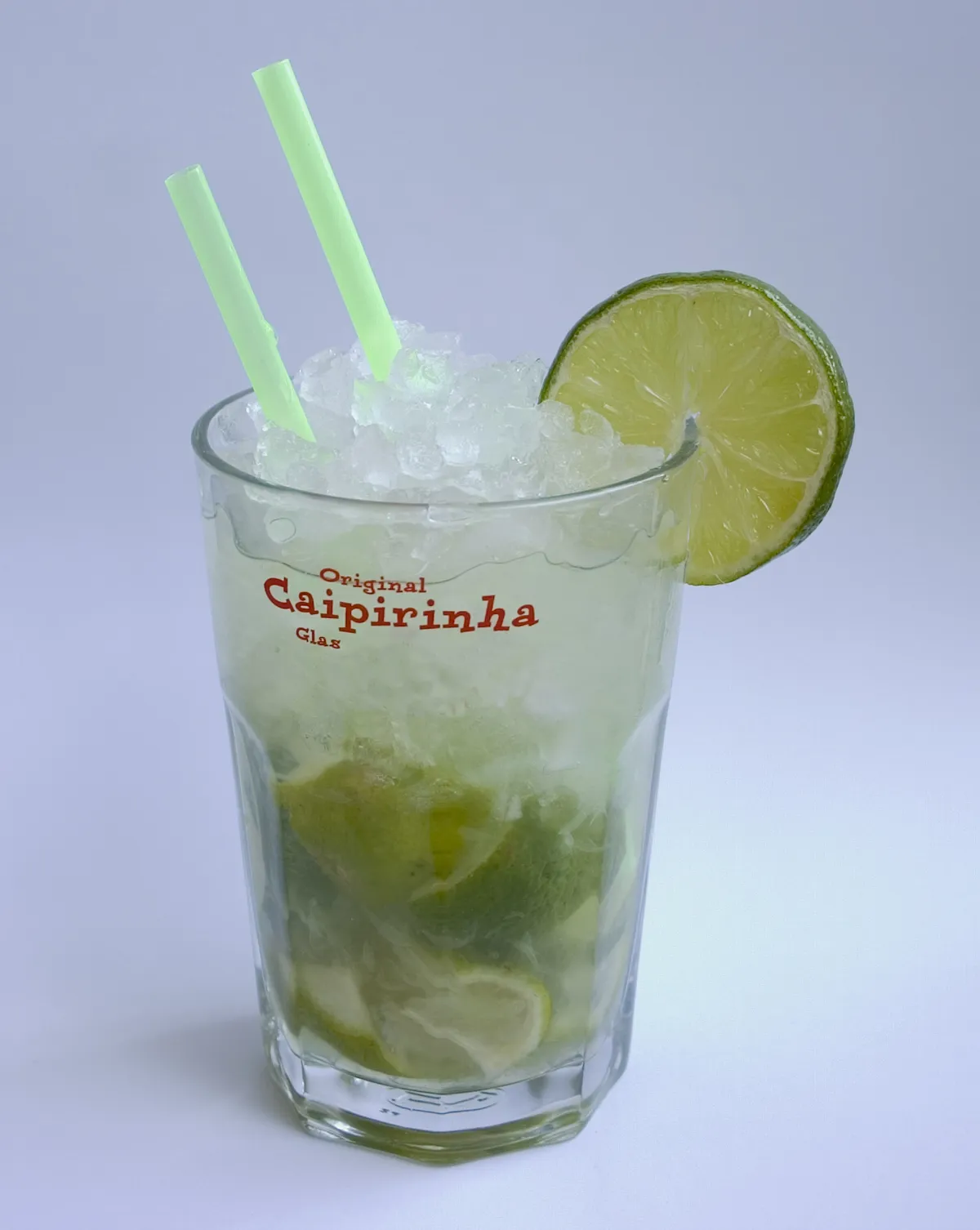
Cachaça has a long history in Brazil, dating back to the colonial sugar era, and today there are artisanal small-batch cachaças worth seeking out far beyond the supermarket brands. Beware the caipirinha's friendliness, it goes down like lemonade and is anything but. One common variation, the caipiroska, swaps vodka for cachaça; purists will tell you it's a different (lesser) animal.
Insider tip
If a beach vendor offers to make you a caipirinha, ask for "pouco açúcar" (less sugar) unless you have a serious sweet tooth, many are made dangerously sweet, which masks the cachaça and the next-morning consequences.
13. Quindim & beijinho, the sweet finale
Brazilian desserts lean unapologetically sweet, and two coconut classics belong on your list. Quindim is a glossy, intensely yellow baked custard of egg yolk, sugar, and coconut, Portuguese convent-baking tradition meeting Brazilian coconut, with a jiggly, almost translucent texture. Beijinho ("little kiss") is the coconut sibling of the brigadeiro: condensed milk and coconut rolled into balls, often topped with a single clove. Together they're the standard sweet ending at parties and bakeries alike.
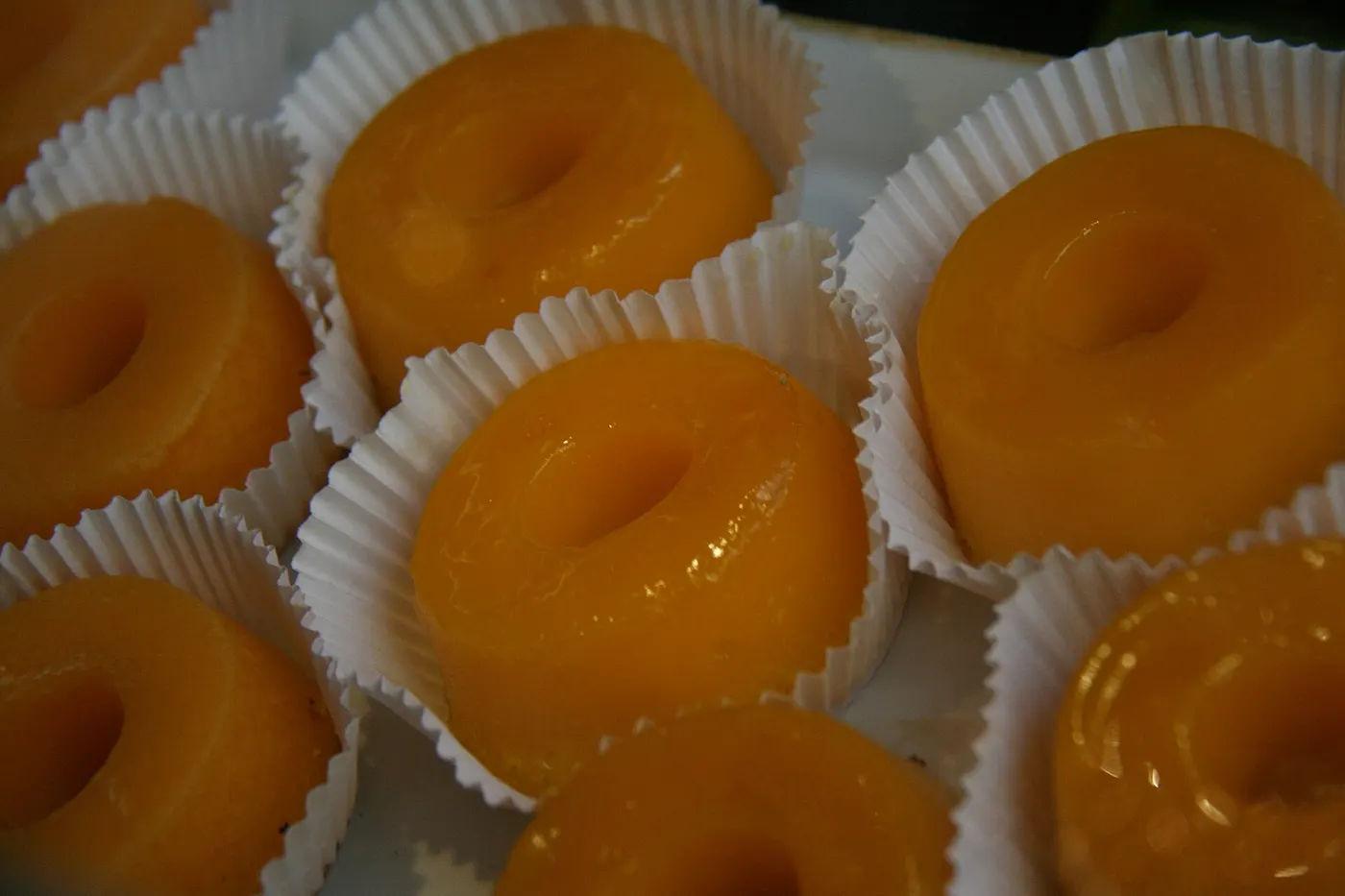
If you're a dessert person, Brazil is your country. The condensed-milk-and-coconut axis runs deep, and once you've had a fresh quindim you'll understand why it has survived for centuries.
14. Guaraná, the berry that looks back at you
Brazil's other national drink isn't alcoholic. Guaraná is a soft drink made from the seed of an Amazonian fruit, and Brazilians drink it the way other countries drink cola, it genuinely rivals the global brands here. The fruit itself is a wonder: when its red shell splits open, the black seed ringed by white aril looks uncannily like a human eye, and Indigenous Amazonian legend explains its origin through exactly that resemblance (locals tell of a beloved child whose eyes became the first guaraná plant).
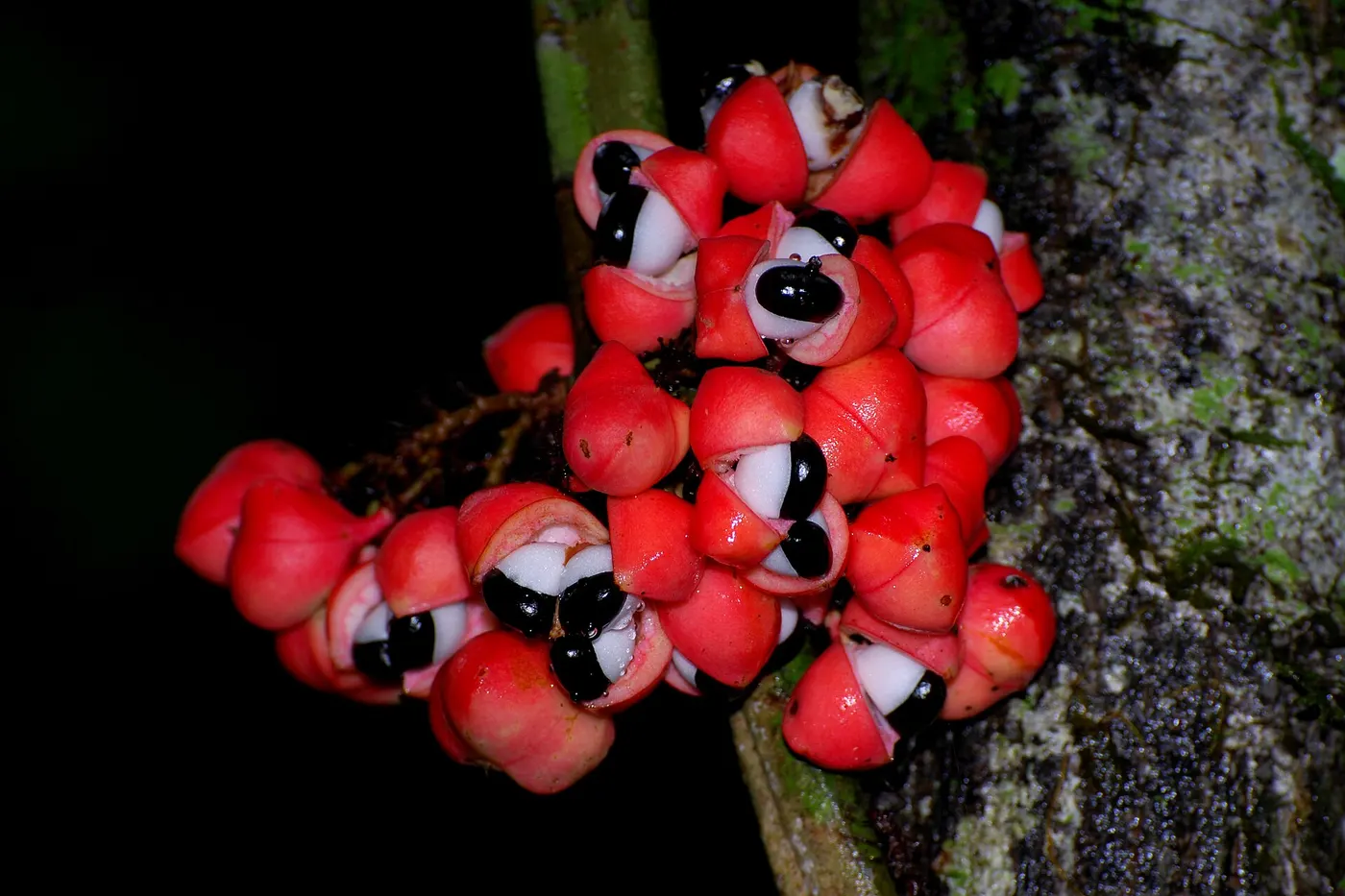
The seed is naturally caffeine-rich, which is why guaraná has long been valued as a stimulant. The soda is sweet, fizzy, and faintly fruity, order one ice-cold at lunch and you'll get why it's everywhere.
15. Bonus rounds: pão de açúcar, cuscuz, and the regional deep cuts
Fifteen is a number, not a limit. A few more you should grab whenever they cross your path: the Northeastern cuscuz nordestino (steamed corn, nothing like Moroccan couscous), a savory breakfast staple; pamonha and canjica during the winter June festivals, made from fresh corn; bobó de camarão, a Bahian shrimp-and-cassava cream that's moqueca's velvety cousin; and São Paulo's enormous Italian-Brazilian pizza and pasta scene, a serious cuisine in its own right.
And yes, Rio's most famous landmark, Pão de Açúcar (Sugarloaf Mountain), shares its "sugarloaf" name with the conical molds once used to ship refined sugar, a nod to the crop that shaped so much of this menu. The food and the history really are the same story.
The fastest way to understand Brazil is to eat where Brazilians eat, at the hour they eat, and order what they order. Everything else is commentary.
How to eat like a local: etiquette & timing
A few customs will help you blend in. Brazilians often eat even finger foods, pizza, sandwiches, fruit, with a napkin or utensils rather than bare hands; you'll rarely see someone grab a slice of pizza by hand at the table.
Lunch is the big meal, especially the weekday "prato feito" (a hearty plated set of rice, beans, protein, salad) and the per-kilo buffet (comida a quilo), where you serve yourself and pay by weight, a brilliant, low-pressure way to sample widely. Coffee, the tiny strong cafezinho, is offered constantly and accepting it is a small social grace.
Tipping is usually built in as a roughly 10% service charge on the bill, so check before adding more. And meals are unhurried, the table is for lingering. Don't expect the check until you ask ("a conta, por favor"); rushing it out unbidden would be considered rude.
Insider tip
For the best value and variety in any Brazilian city, find a busy comida a quilo (pay-by-weight) buffet at lunch. Locals pack them, the turnover keeps the food fresh, and you can try ten dishes in one sitting without committing to a single full plate.
Did you know? Surprising Brazilian food facts
- Brazil has long been one of the world's largest coffee producers, coffee culture here runs deep, and the little cafezinho is a national reflex.
- Many of Brazil's signature snacks and dishes are gluten-free by tradition, not trend, pão de queijo, tapioca, and açaí all start from cassava or fruit, not wheat.
- São Paulo is home to one of the largest Japanese communities outside Japan, which reshaped Brazilian food, sushi is genuinely mainstream, and the humble pastel likely owes its existence to East Asian immigrants.
- Cachaça, the base of the caipirinha, is distinct from rum because it's distilled from fresh sugarcane juice rather than molasses.
- The acarajé tradition in Bahia is tied to the Afro-Brazilian religion Candomblé and is recognized as part of the country's cultural heritage.
Building a trip around the food
Here's the practical truth: you cannot taste all of Brazil in one trip, so eat strategically by region. Rio gives you feijoada, beach açaí, botequim snacks, and easy access to the country's icons, pair the eating with things to do in Rio de Janeiro and a visit to Christ the Redeemer.
Salvador and Bahia are non-negotiable for acarajé, vatapá, and the African-rooted kitchen. The Amazon delivers real açaí and river fish. The South is for churrasco. If you've only got two weeks, our 2-week Brazil itinerary shows how to chain the highlights without burning out.
Timing matters too: many ingredients and festival foods are seasonal, and the crowds (and prices) swing hugely with the calendar, so it's worth reading up on the best time to visit Brazil before you book. First-timers nervous about street food and feiras should also skim our honest take on whether Brazil is safe for tourists, the short version is that with normal city sense, the feira is one of the friendliest places you'll go.
A note for travelers with dietary needs or mobility considerations: many of these experiences, feiras, churrascarias, beach quiosques, can be wonderful and very doable, but specifics like step-free access, restroom availability, and seating vary place to place. We arrange accessible travel across Brazil, but always confirmed per traveler rather than as a blanket promise, tell us your needs and we'll verify the actual venues before you go.
Key takeaways
- There's no single Brazilian cuisine, eat by region: feijoada and beach açaí in Rio, coconut-and-dendê dishes in Bahia, savory açaí in the Amazon, churrasco in the South.
- The unmissables: feijoada, pão de queijo, coxinha, moqueca, acarajé, brigadeiro, picanha, pastel with caldo de cana, tapioca, caipirinha, and guaraná.
- Eat lunch as the main meal, hit a weekend feira before noon, and try a pay-by-weight buffet for maximum variety.
- Many staples are naturally gluten-free (cassava-based), and dietary/accessibility needs can be accommodated when confirmed venue by venue.
- Order like a local: less sugar in your caipirinha, oranges with your feijoada, and always eat the pão de queijo warm.
Brazilian food is generous the way Brazilians are generous, abundant, unpretentious, and best enjoyed slowly and in company. Come hungry, follow the locals, and let the country feed you.
Ready to taste it for yourself? Tell us which dishes you most want to try and we'll build a Brazil trip around them, feira mornings, moqueca lunches and all.
Plan my trip on WhatsAppImage credits: Wilfredor / CC BY-SA 4.0, via Wikimedia Commons; Joy / CC BY 2.0, via Wikimedia Commons; Sintegrity / CC BY-SA 4.0, via Wikimedia Commons; Melsj / CC BY-SA 4.0, via Wikimedia Commons; BR / CC BY-SA 4.0, via Wikimedia Commons; Leonardo Carvalho / CC BY-SA 2.5, via Wikimedia Commons; BuenosAiresPhotographer / CC BY-SA 2.0, via Wikimedia Commons; Anizio (Olinda) da Silva / CC BY-SA 2.0, via Wikimedia Commons; Tamorlan / CC BY 3.0, via Wikimedia Commons; Geoff Gallice / CC BY 2.0, via Wikimedia Commons.
Other photos via Unsplash or in the public domain.