Trip in
 There is a moment, somewhere over the western reach of Brazil, when you press your forehead to the airplane window and the world below simply stops making sense. The land is no longer land. It is a living green ocean stretching past every horizon, veined with rivers the colour of strong tea, curling and doubling back on themselves like something drawn by a god in a hurry.
This is the Amazon rainforest in Brazil, and no photograph, no documentary, no breathless paragraph (this one included) prepares you for the scale of it. I have guided travelers across this country for years, and the Amazon is the one place where even the most seasoned, eye-rolling, seen-it-all visitor goes quiet. So let's plan this properly: where to enter, what to see, when to come, and how to do it like someone who knows the river rather than someone the river surprises.
The Amazon is not a single "thing" you visit, like a waterfall or a statue. It is a region the size of a continent, and the way you experience it depends almost entirely on three choices, your gateway city, your style of stay (a lodge or a boat), and the season you arrive in. Get those three right and the rest falls into place like a canoe slipping into the current.
Choosing your gateway: Manaus, Belém, and the wilder doors in
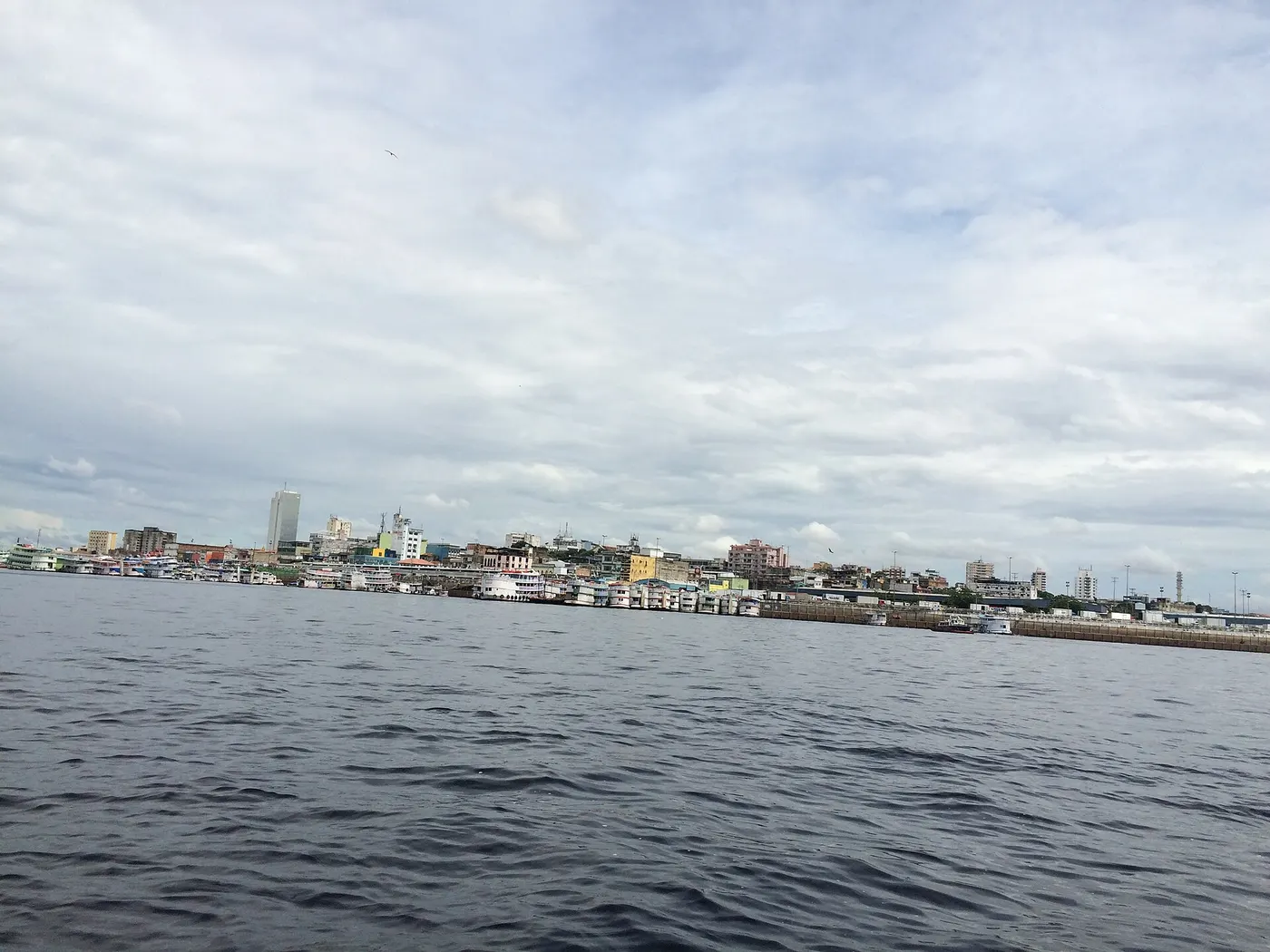
Most journeys into the Brazilian Amazon begin in Manaus, a city of over two million people sitting improbably in the middle of the jungle, reachable in practice only by plane or by boat. It is the capital of Amazonas state, perched on the north bank of the Rio Negro just upstream of the spot where that black river meets the pale Solimões to become, officially, the Amazon. Manaus is your supply depot, your launch pad, and, surprisingly, a city with a genuinely strange and glorious history (more on the opera house in a moment).
The second great door is Belém, near the Atlantic mouth of the river in Pará state, grittier, soulful, brilliant for food and for the brackish, tide-pushed "estuary Amazon" and the vast forested island of Marajó.
And then there is the gateway most travelers never hear about: Tefé, a small river town reached by a short flight from Manaus, which is the jumping-off point for the Mamirauá Sustainable Development Reserve, a flooded "várzea" forest reserve that is, in my honest opinion, the single most rewarding wildlife destination in the entire Brazilian Amazon. Fewer people, more animals, and a community-run conservation model that actually works.
Not sure which gateway fits your time and travel style? Tell us your dates and we'll map the smartest route into the Amazon for you.
Plan my trip on WhatsAppThe story behind Manaus: an opera house in the jungle
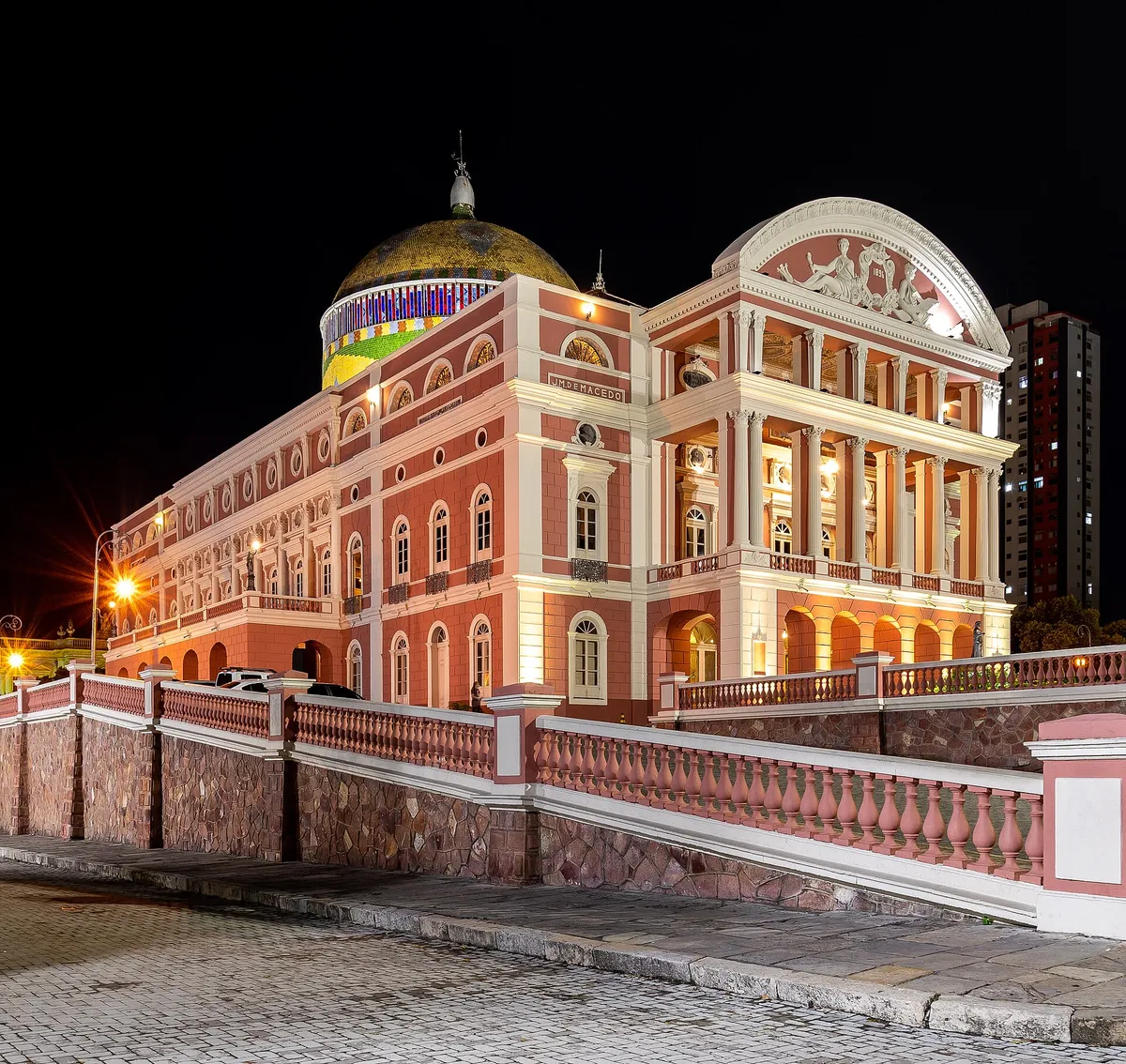
Here is the fact that makes every traveler stop mid-sip: there is a pink-and-cream belle-époque opera house in the middle of the Amazon, and it has been there since the nineteenth century. The Teatro Amazonas opened in 1896, the extravagant centrepiece of Manaus during the great rubber boom, when the Amazon basin held a near-monopoly on the world's natural rubber and the "rubber barons" of Manaus became some of the wealthiest people on earth.
The legends around that wealth are wonderful, and you should treat them as legend: locals love to tell that the barons sent their laundry to be washed in Europe and lit cigars with banknotes. What is verifiable is extraordinary enough. The theatre was built largely with materials shipped in from Europe, its style and furnishings drawing on French, Italian, and Scottish craftsmanship, and its dome was finished with thousands of tiles in the colours of the Brazilian flag.
When the rubber economy collapsed in the early twentieth century, after seeds smuggled out of the Amazon let Britain establish cheaper plantations in Southeast Asia, the boom evaporated almost overnight. The opera house survived, a glittering ghost of the money that built it.
Walk through its salons today before you head upriver. It's the perfect prologue: a monument to the moment the world wanted what only this forest had, and a reminder of how brutal that extraction was for the people and trees that produced it.
Insider tip
Spend your first night in Manaus, not at the airport rushing onward. Catch an early-morning visit to the Teatro Amazonas before the heat peaks, then browse the Mercado Adolpho Lisboa down by the waterfront, a cast-iron market hall where the river's bounty (tambaqui fish, tucumã, cupuaçu) is laid out in glorious chaos.
The Meeting of the Waters: where two rivers refuse to mix
If the Amazon has a single signature wonder, this is it. Just downstream of Manaus, the inky, almost black water of the Rio Negro meets the pale, sediment-heavy, café-au-lait Rio Solimões, and instead of blending, the two rivers run side by side for several kilometres, a sharp ribbon of dark and light flowing together but apart. It is one of the strangest sights in nature, and it is completely real.
Why does it happen? The two rivers differ in temperature, speed, and density. The Negro is warmer, slower, and acidic (stained dark by decomposed plant matter); the Solimões is cooler, faster, and loaded with pale Andean sediment. Those differences keep them from merging until, finally and gradually, downstream, they surrender and become the Amazon proper.
Two rivers, one channel, refusing for kilometres to become each other, the Amazon's quiet way of showing you it plays by different rules.
You'll reach the Meeting of the Waters by boat from Manaus, and the best light is early. Trail your hand off the gunwale and you can literally feel the temperature change as you cross the line.
Lodge or boat? The single biggest decision you'll make
Once you've chosen your gateway, you choose your bed, and in the Amazon your bed is either rooted to the bank or drifting on the current.
Jungle lodges
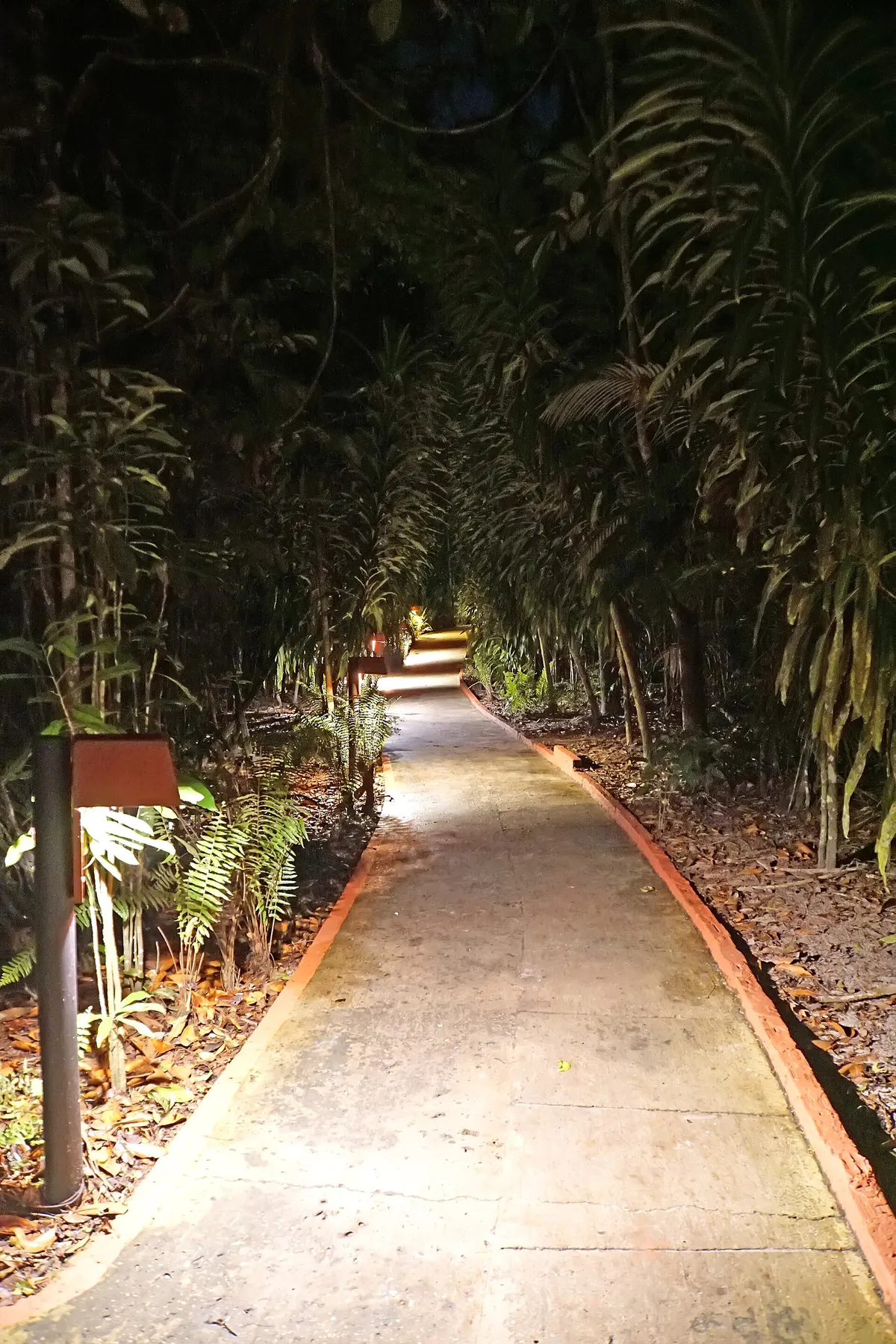
A lodge plants you in one stretch of forest, usually a few hours by boat from your gateway city. You sleep in a cabin or bungalow (often with mosquito-netted, open-air rooms that let the night sounds pour in), and you radiate out each day on guided walks, canoe paddles through flooded forest, piranha fishing, and night safaris. Lodges are ideal if you want to know one patch of jungle deeply, walk on solid trails, and return to the same hammock each evening. The trade-off is that you explore a smaller radius.
River cruises
A riverboat cruise turns the whole forest into a moving window. You sleep aboard and wake somewhere new, exploring side channels (the locals call them "igarapés") in smaller skiffs each day, reaching wildlife-rich backwaters a fixed lodge could never touch. Cruises range from rustic regional boats with hammock decks to comfortable small ships. Choose a cruise if you want range, variety, and the romance of falling asleep to the engine's thrum.
Insider tip
Whichever you choose, the guide makes or breaks the Amazon. A great naturalist guide will spot a sleeping sloth in a tangle of leaves you'd swear was empty, mimic a tinamou until one answers, and read the forest like a book. Ask, before you book, about guide-to-guest ratios and whether guides are local to the region, local guides see things outsiders simply cannot.
What you'll actually see: the cast of the rainforest
Let me manage expectations honestly, because this matters: the Amazon is not a safari. The animals here are mostly small, camouflaged, nocturnal, or high in the canopy. You will not step off the boat into a stampede of jaguars. What you get instead is subtler and, once your eyes adjust, more thrilling, a forest that slowly reveals itself.
Pink river dolphins (botos)
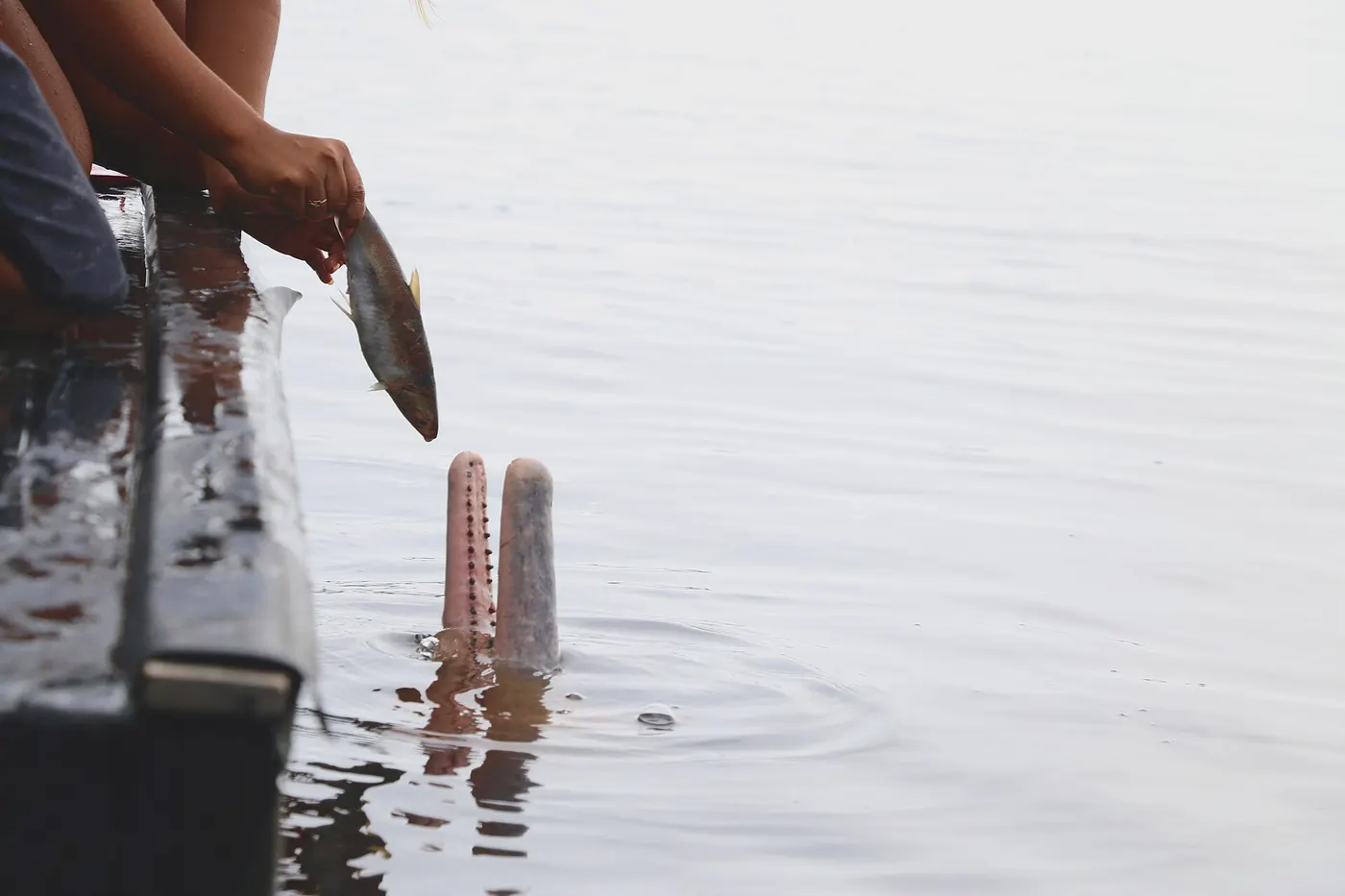
The boto, the pink Amazon river dolphin, is the river's most beloved resident, a genuinely pink, long-snouted, freshwater dolphin found in the Amazon and Orinoco basins. In Amazonian folklore, the boto is a shapeshifter: locals tell of a charming man in a white hat who emerges from the river at night to seduce villagers, then slips back beneath the surface by dawn. Present it as the legend it is, but watch one surface in the black water at sunset and you'll understand exactly how the story was born.
Caimans, by torchlight
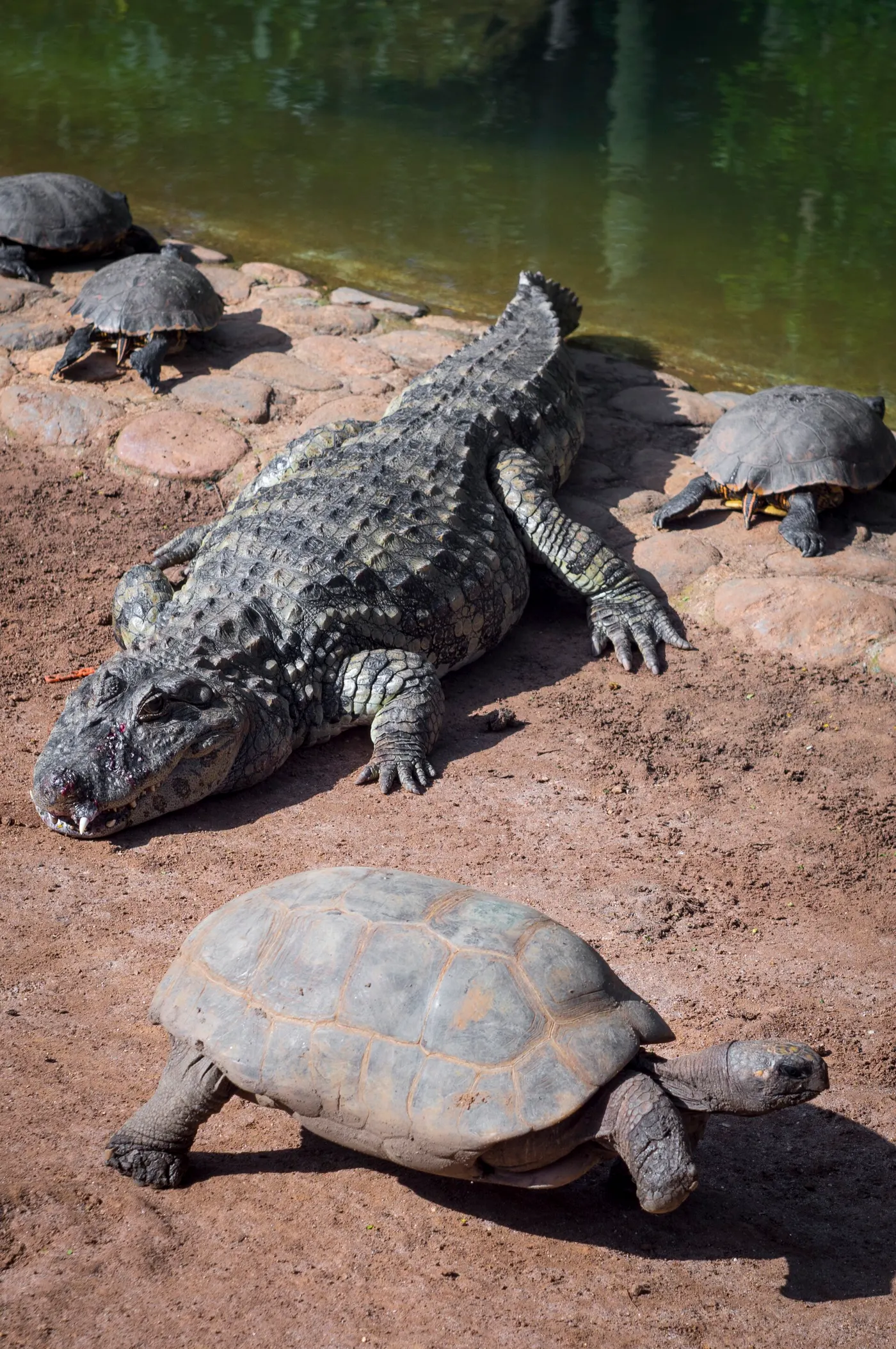
The night safari is unmissable. You glide into the dark in a small boat, the guide sweeping a torch across the water until two orange embers flare back, the eye-shine of a caiman. Skilled guides can scoop a small one from the water to show you up close before releasing it, and the soundscape alone (frogs, insects, the occasional unidentifiable splash) is worth the trip.
Monkeys, sloths, macaws, and more
Expect troops of monkeys crashing through the canopy, sloths hanging like mossy hammocks, scarlet and blue-and-yellow macaws in raucous pairs, toucans, kingfishers, and, if you're lucky and quiet, a glimpse of something rarer. The Amazon is the most biodiverse place on the planet; patience is the price of admission and the reward.
Want the wildlife-richest itinerary for your season? We'll match your dates to the lodges and reserves where you'll actually see the most.
Plan my trip on WhatsApp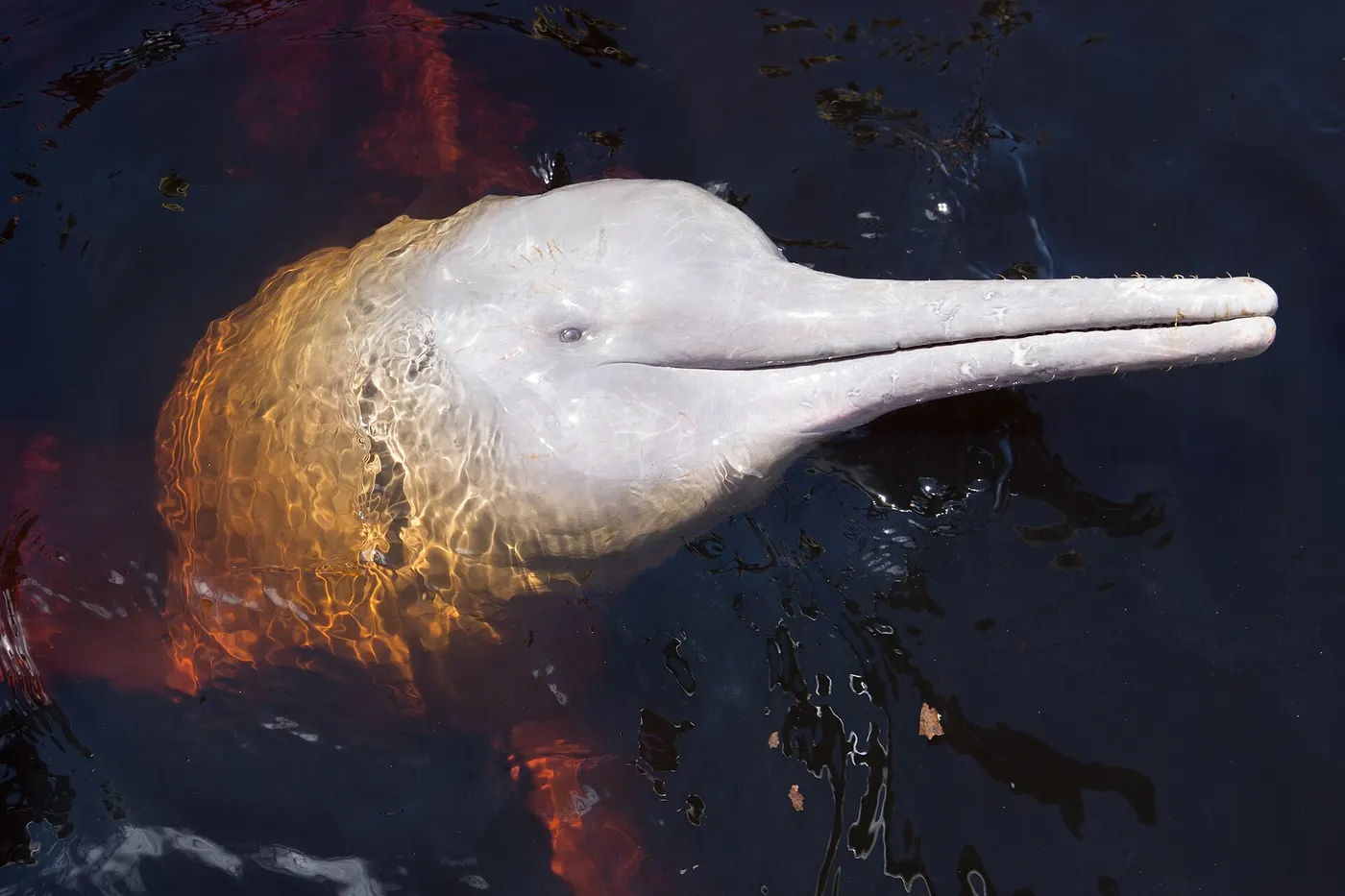
Giant water lilies and the view from above
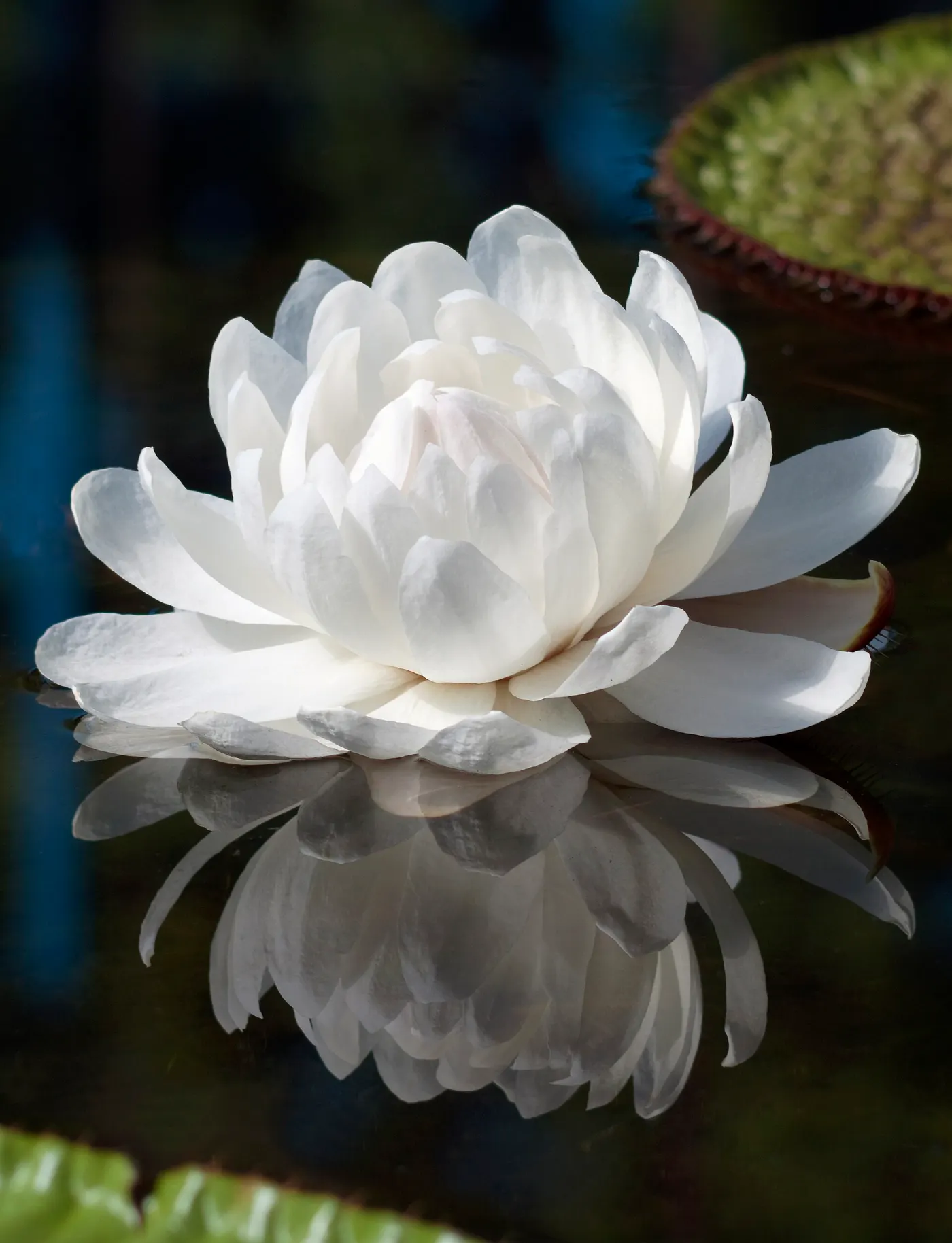
Few sights stop travelers like the Victoria amazonica, the giant Amazon water lily, whose round, upturned-rimmed pads can grow large enough to look like green trays floating on the still backwaters. They flower at night, opening white and turning pink, pollinated by beetles, a small piece of theatre most visitors never witness.
And then there are the canopy towers, tall walkways and platforms that lift you above the forest floor into the treetops where most of the Amazon's life actually happens. Be up one at dawn, mist still clinging to the green, the forest tuning up around you, and you'll have a memory you'll bore your friends with for years.
Anavilhanas and the secret backwaters most visitors miss
Here is where I send the travelers I most want to impress. Upstream from Manaus on the Rio Negro lies the Anavilhanas Archipelago, one of the largest river archipelagos in the world, a maze of hundreds of islands, channels, and lagoons protected as a national park. Because the Negro's dark, acidic water carries fewer biting insects than the sediment-rich rivers, it's a more comfortable place to explore on foot and by paddle, and the labyrinth of channels means you can lose the crowds entirely.
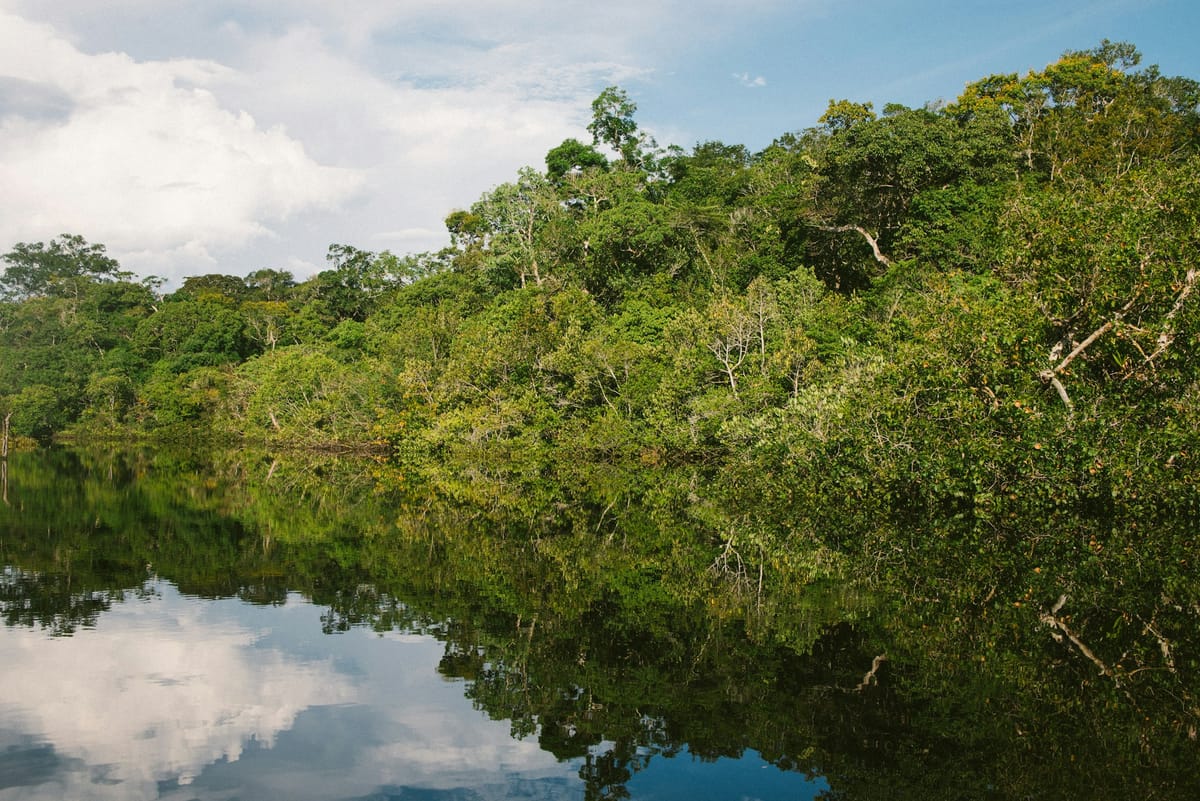
What most visitors miss: the truly magical hours here are the edges of the day. Take a small canoe, not the big motorboat, into a narrow igapó (flooded forest channel) at first light or last light, cut the engine, and just drift. The reflections turn the black water into a perfect mirror, and the sound of the forest closes over you. This is the Amazon nobody puts on a postcard, and it is the one I'd cross the world for.
Did you know? The numbers that defy belief
The Amazon collects superlatives the way the river collects rain. A few that are worth carrying in your head as you travel:
- It is the largest tropical rainforest on Earth, spanning multiple South American countries, with the largest share in Brazil, and it holds a vast proportion of the planet's plant and animal species.
- The Amazon River discharges more water than the next several largest rivers combined, by volume of flow, it is the mightiest river on the planet, pouring an astonishing amount of freshwater into the Atlantic.
- The forest is sometimes called the "lungs of the planet," though scientists note its net oxygen contribution is roughly zero; its real climate value is storing enormous quantities of carbon, which is exactly why how you travel here matters.
- In the high-water season, the river can rise many metres, flooding the forest so deeply that you can paddle a canoe among the treetops where you'd have walked on dry ground months earlier.
Best time to visit: flooded forest vs river beaches
There is no single best time, there are two completely different Amazons, and the one you get depends on the water. This is the most important seasonal decision in the country, far more consequential than the dry-versus-wet calculus you'd make for the coast (and worth reading alongside our guide to the best time to visit Brazil).
High water (the flooded forest)
Roughly in the first half of the year, the rivers swell and the igapó, the flooded forest, comes into its own. You explore by canoe, gliding silently between trunks and into the canopy's reach. Wildlife concentrates on the remaining dry land and in the trees, and the reflections are sublime. This is the Amazon of dreams, though trails may be limited because the ground itself is underwater.
Low water (the river beaches)
Later in the year the waters drop, exposing white sandbanks and river beaches, opening up jungle trails for walking, and concentrating fish, and therefore dolphins, caimans, and birds, into shrinking pools and channels. Wildlife viewing on foot is at its best, and hiking is far more rewarding.
Insider tip
If walking deep into the forest is a priority, lean toward low-water months; if drifting silently through flooded canopy and chasing those mirror-still dawns is the dream, choose high water. Tell your planner which experience matters most and let the season decide your dates rather than the other way around.
What to pack for the Amazon
The forest is hot, humid, and gloriously indifferent to your comfort. Pack smart and it's heaven; pack badly and you'll spend three days swatting and squelching. The essentials:
- Lightweight, long-sleeved shirts and long trousers in muted colours, they beat shorts for sun, insects, and brushing through vegetation.
- Strong insect repellent and, on the sediment rivers especially, a way to cover up at dawn and dusk when bugs are busiest.
- A wide-brimmed hat, reef-safe sunscreen, and a refillable water bottle.
- Quick-dry clothing and a light rain jacket or poncho, it is a rainforest; it will, at some point, rain.
- Closed shoes and sandals you don't mind soaking; many lodges provide rubber boots, confirm sizing in advance.
- Binoculars (the single most underrated item, the canopy is far away) and a dry bag for cameras and phones.
- A headlamp for night walks and the inevitable power lulls at remote lodges.
Responsible and community-based travel
How you visit the Amazon is not a footnote, it is the whole ethical centre of the trip. The forest and its peoples have been on the losing end of extraction for centuries, from the rubber boom to today's deforestation. The good news is that thoughtful tourism can be part of the solution.
Seek out community-based and locally owned operations, where your money flows to the people who live in and protect the forest. The Mamirauá reserve near Tefé is a flagship example of conservation funded partly through visitors.
Choose smaller groups, never feed or handle wildlife outside a guide's careful, ethical practice, respect Indigenous communities (only visit with genuine invitation and proper guidance, and always ask before photographing people), and pack out what you bring in. A great guide will also teach you the difference between a genuine community partnership and a staged "tribal visit", choose the former, always.
Accessible travel in the Amazon
People often assume the rainforest is off-limits if you have mobility needs. It is more achievable than you'd think, but it must be planned carefully and honestly. Boat-based travel can suit some travelers well, since so much of the experience happens from the water rather than on rough trails, and certain lodges have flatter boardwalks and adapted facilities.
The crucial principle is this: accessibility in the Amazon is always confirmed per traveler, we make no blanket promises. Boarding boats, transferring into small skiffs, the height of jetties at high versus low water, and the surface of forest trails all vary enormously.
Tell us exactly what you need and we'll verify, lodge by lodge and boat by boat, what is genuinely workable before anything is booked. This is the heart of our accessible travel philosophy, and you can read more about how we approach it in our guide to an accessible trip to Brazil.
How to get there and how it fits your wider trip
Practically, the Amazon is a fly-in destination. Manaus and Belém both have airports with domestic connections to Brazil's main hubs, and a short hop from Manaus reaches Tefé for the Mamirauá reserve. From your gateway city, your lodge or boat handles the river transfer, that's part of what you're paying for, and part of the adventure.
Most travelers fold the Amazon into a broader Brazil itinerary rather than visiting in isolation. It pairs beautifully with the beaches and mountains of Rio, the thunder of Iguaçu Falls, and the cultural depth of the northeast. If you're building a longer trip, our two-week Brazil itinerary shows how the Amazon slots in without exhausting you, and our overview of Brazil's destinations can help you prioritise. First-time visitors fretting about the practicalities should also read our honest take on whether Brazil is safe for tourists.
Insider tip
Give the Amazon at least three to four nights. A single overnight is a tasting menu when you've travelled this far for the feast, the magic compounds, and by the third dawn your eyes have learned how to see the forest.
When you finally come back downriver, sunburnt and bug-bitten and quietly changed, you'll find the Amazon has rearranged something inside you. It does that. After this, the rest of Brazil, the Rio day tours, the food (start with our guide to Brazilian dishes), the carnival of it all, feels like a victory lap. But it starts here, in the green, on the black water, with two rivers refusing to mix.
Key takeaways
- Enter via Manaus (the classic gateway and home of the 1896 Teatro Amazonas), Belém (the estuary Amazon and great food), or fly on to Tefé for the wildlife-rich Mamirauá reserve.
- Choose a lodge to know one patch of forest deeply, or a river cruise for range and variety, and prioritise a great local guide above all.
- Don't miss the Meeting of the Waters, the dawn channels of the Anavilhanas Archipelago, pink dolphins, night-safari caimans, and giant water lilies.
- Season decides everything: high water for canoeing the flooded forest, low water for river beaches and trail walking.
- Travel responsibly through community-based operators; accessibility is real but always confirmed per traveler.
Ready to drift down the black water and wake to a forest tuning up at dawn? Let's build your Amazon trip together, every detail confirmed.
Plan my trip on WhatsAppImage credits: Susan Valentim / CC BY-SA 4.0, via Wikimedia Commons; Dennis G. Jarvis / CC BY-SA 2.0, via Wikimedia Commons; Nortondefeis / CC BY-SA 4.0, via Wikimedia Commons; Karen Mohrstedt Badin / CC BY-SA 4.0, via Wikimedia Commons; Bilby / CC BY 3.0, via Wikimedia Commons; Paulo JC Nogueira / CC BY-SA 3.0, via Wikimedia Commons; Deni Williams / CC BY 2.0, via Wikimedia Commons. Other photos via Unsplash or in the public domain.