Trip in
 Stand at the edge of the Brazilian boardwalk on a clear morning and you don't so much see Iguazu Falls as feel it: a low thunder coming up through the soles of your shoes, a fine cool mist that beads on your eyelashes, the smell of wet stone and warm rainforest, and a rainbow hanging in the spray like the place is showing off. Then a coati trots past your ankles, utterly unbothered.
This is one of the great natural spectacles on Earth, wider than your eyes can hold, and the first question almost every traveler asks me is the same one: when it comes to Iguazu Falls, Brazil or Argentina, which side should I visit? I'll give you the honest local answer, and then I'll talk you out of choosing just one.
Iguazu Falls: Brazil or Argentina, the short answer
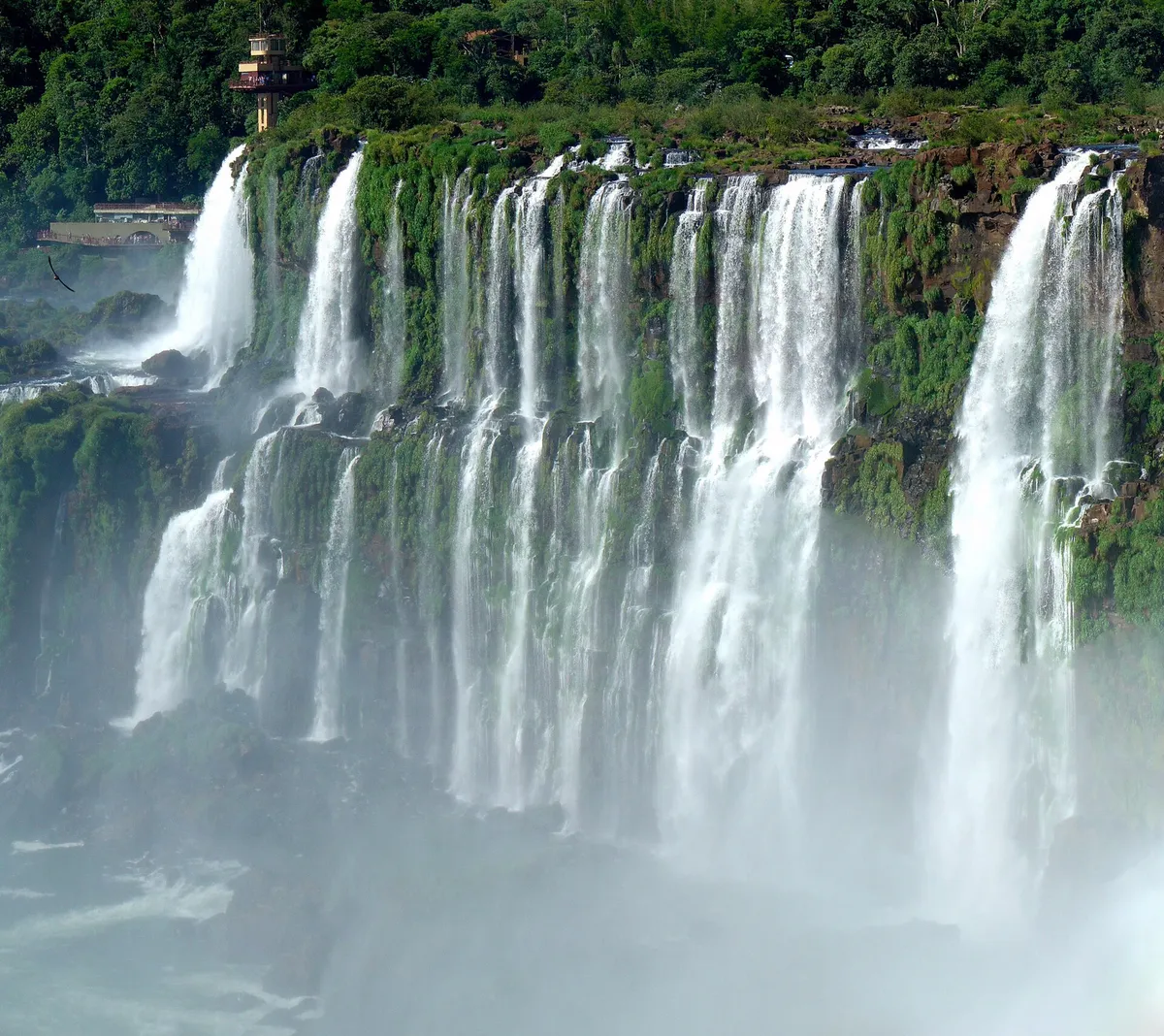
Here is the rule of thumb I give every guest, and it has never let anyone down. The Brazilian side gives you the panorama; the Argentine side gives you the immersion. From Brazil you stand back and take in the whole sweeping curtain of cascades in one heart-stopping view, it's the postcard, the "oh my goodness" moment, and you can do it justice in half a day.
From Argentina you go deep, walking kilometres of trails that lead you out onto the water, above it, beside it, and finally to the lip of the Garganta do Diabo, the Devil's Throat, the single most powerful waterfall in the whole system. That side wants a full day, easily.
So if someone twists my arm for one side only, I'll usually say Argentina for sheer time-on-the-falls and drama, but I say it through gritted teeth, because skipping the Brazilian panorama is like hearing an orchestra tune up and leaving before the symphony. The falls straddle the border, and the two countries each protect their half as a national park. Do both. Genuinely. You will not regret the extra day.
The Brazilian side is the wide shot that takes your breath away; the Argentine side is the close-up that won't let it back.
Trying to slot both sides of the falls into a wider Brazil route? Our Rio-based team maps it out for you, border crossing and all.
Plan my trip on WhatsAppThe story behind the "big water"
The name tells you almost everything. Iguazu, spelled Iguaçu in Portuguese on the Brazilian side and Iguazú in Spanish on the Argentine side, comes from the Guaraní words y (water) and ûasú (big). Big water. The Guaraní, who have lived in this region for centuries, named it with the kind of plain accuracy that lands harder than any marketing.
The first European generally credited with reaching the falls was the Spanish conquistador Álvar Núñez Cabeza de Vaca, who came upon them in 1542 during an overland journey through the region. He's said to have named them the Saltos de Santa María, a name that, mercifully, I think, never stuck. For centuries afterward the falls remained remote, guarded by dense subtropical forest, known intimately to the Guaraní and to few others.
The story locals love most isn't in any history book, though, it's legend, and it should always be told as legend. As the Guaraní tell it, a serpent-like deity named M'Boi lived in the river and demanded the sacrifice of a beautiful young woman, Naipí. But Naipí was in love with a mortal warrior, Tarobá, and on the eve of the sacrifice the two lovers fled together by canoe.
Enraged, the deity is said to have split the river in his fury, carving the great gorge to swallow them, turning Naipí into the rocks and Tarobá into a tree on the bank, forever separated by the falls, yet forever within sight of each other across the chasm. When the sun catches the mist and a rainbow appears, the legend says it is the two lovers reunited at last. I can't promise you a serpent, but I can promise you the rainbow.
Both nations recognized what they were guarding. Argentina's Iguazú National Park was inscribed as a UNESCO World Heritage Site in 1984; Brazil's Iguaçu National Park followed in 1986. Together they protect not just the falls but one of the largest surviving fragments of the Atlantic Forest, a biome rarer and more endangered than the Amazon.
Did you know?
The Iguazu system is made up of an astonishing number of separate cascades, somewhere around 275 individual falls, depending on the river level, strung along nearly three kilometres of cliff edge. It is dramatically wider than Niagara and taller too. First Lady Eleanor Roosevelt is famously reported to have gasped, on seeing Iguazu, "Poor Niagara!", a line guides on both sides of the border have been gleefully repeating ever since. Whether or not she truly said it, every visitor who has seen both tends to agree with the sentiment.
The Brazilian side: the grand panorama
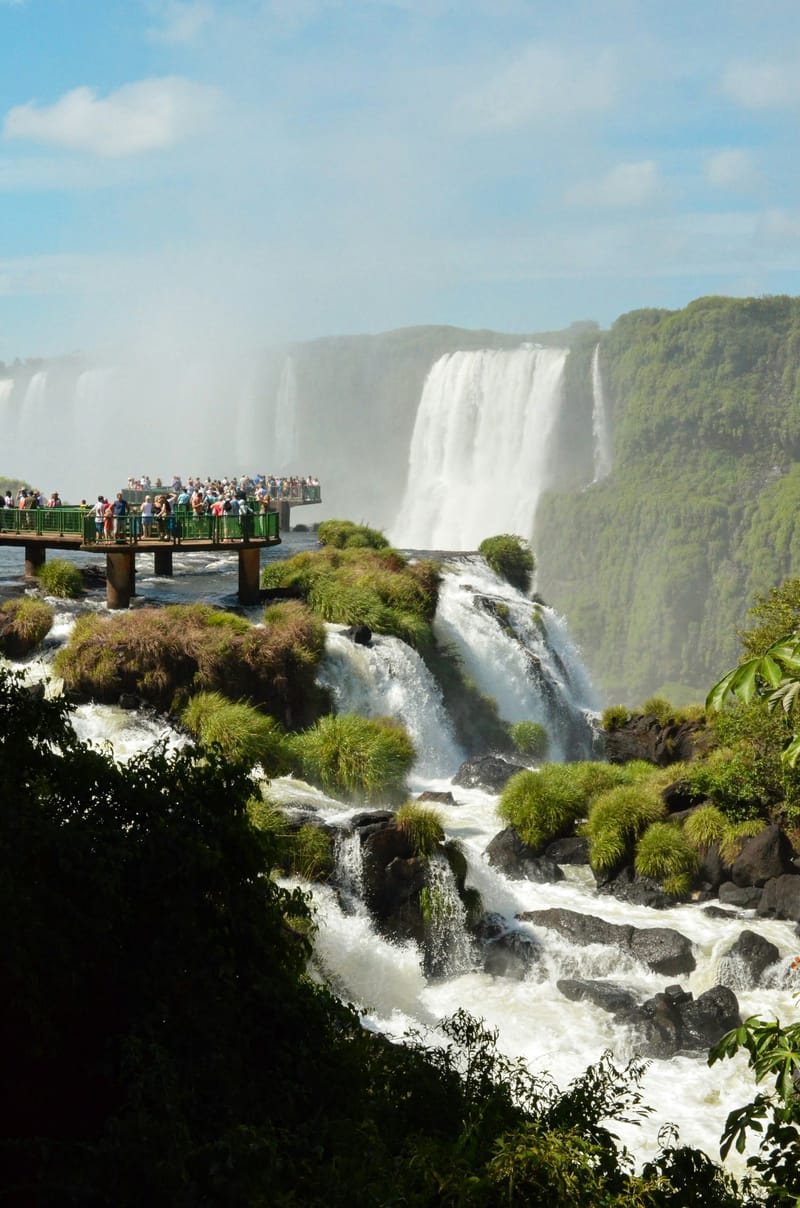
The Brazilian side, inside Parque Nacional do Iguaçu near the city of Foz do Iguaçu, is built for one thing: the view. There's essentially a single main trail, but oh, what a trail. It hugs the canyon for a bit over a kilometre, and at every bend the perspective shifts and the Argentine cascades open up across the gorge in front of you, tier upon tier, more than you can count.
The grand finale is the boardwalk that juts out over the river right beneath a thundering section near the Devil's Throat. You walk out onto it and the spray hits you sideways; people shriek and laugh and clutch their phones in plastic bags. There's an elevator and a viewing platform to take it all in from above too.
Because it's compact and largely paved and flat, the Brazilian side is the more straightforward of the two to navigate, a real advantage if you're managing energy, mobility, or small children. As with any trip, the right pace and the right support should always be confirmed per traveler rather than assumed; if you want this done thoughtfully, this is exactly the kind of detail our accessible travel planning exists to handle.
Half a day covers the Brazilian side comfortably. Arrive early, and I mean at the gate when it opens, and you'll have those first viewpoints nearly to yourself before the tour buses roll in.
Insider tip
On the Brazilian boardwalk, the morning light is at your back, which means the rainbows form in front of you over the falls, perfect for photos. By mid-afternoon the sun has swung around and you're often shooting into glare. First two hours after opening: best light, fewest people, coolest air.
The Argentine side: walking inside the falls
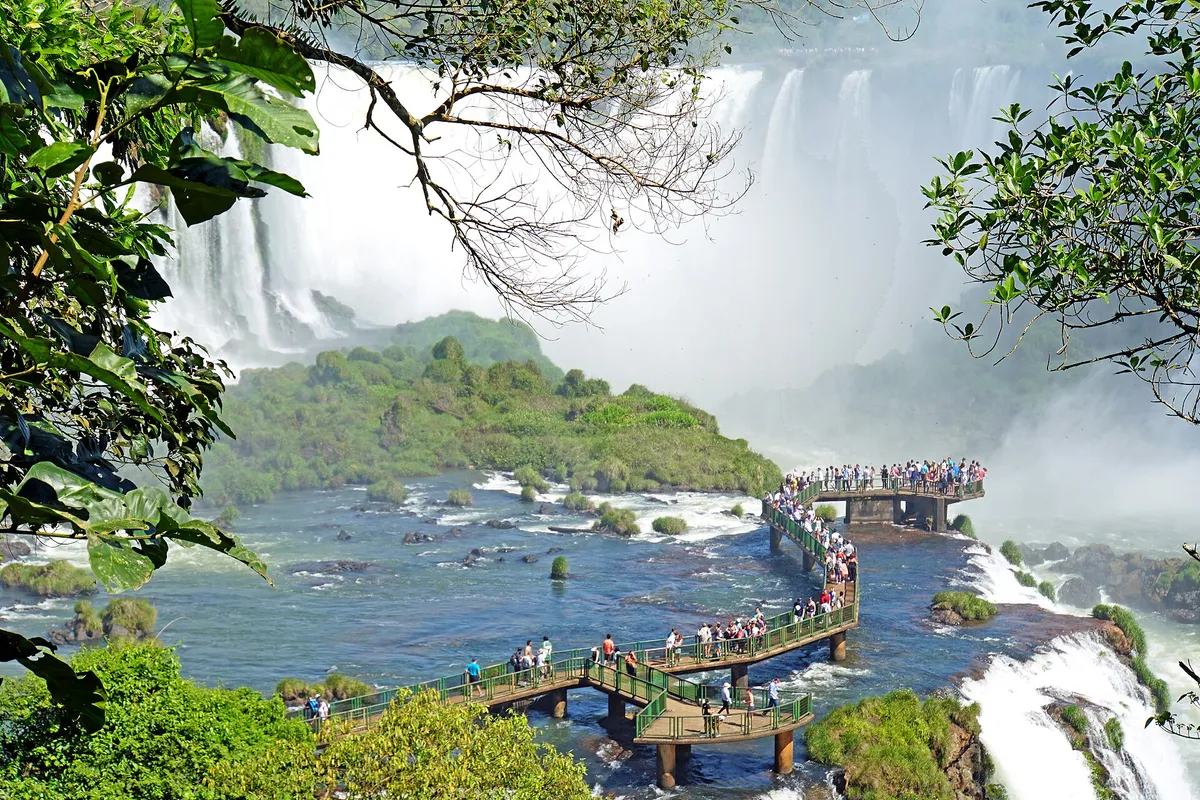
Cross the border to Parque Nacional Iguazú and the experience flips entirely. Here you don't view the falls from across a gorge, you walk among them. A network of trails and a little open-air jungle train spread you across the park, and you'll want every hour of a full day to do them justice.
The Upper Circuit (Circuito Superior) takes you along the tops of the cascades on raised walkways, so the water rushes out from beneath your feet and over the edge in front of you. The Lower Circuit (Circuito Inferior) brings you down to the base, close enough to feel the cascades breathe on you. Both are wonderful warm-ups for the main event.
Garganta do Diabo, the Devil's Throat
You take the train to the far station, then walk a long catwalk strung across the broad, deceptively calm upper river. The water beneath you barely seems to move. And then you reach the end of the boardwalk and the world simply falls away. The Garganta do Diabo, Garganta del Diablo in Spanish, is a vast U-shaped chasm where an enormous volume of the river plunges over the edge at once.
It is the tallest and most powerful single waterfall in the whole Iguazu system, and standing at its rim is genuinely overwhelming: the roar, the wind the falling water generates, the column of mist boiling up so high it sometimes hides the bottom entirely. Hold the railing. Wear something you don't mind soaking. Then just stand there and let it rearrange you a little.
Iguazu pairs beautifully with Rio, the Amazon, or a wider loop. Tell us what you're dreaming of and we'll build the route.
Plan my trip on WhatsAppSo, how long do you really need?
My honest recommendation: give the falls two full days and a sensibly placed night. One day for the Brazilian panorama (with time left over for a nearby attraction), one full day for the Argentine trails and the Devil's Throat. If you are truly squeezed for time, you can rush the Brazilian side in a morning and the Argentine side in a long afternoon-and-the-next-morning, but you'll spend a lot of that time crossing the border and feeling hurried at the rim of the most beautiful thing you'll see all year. Don't do that to yourself.
If you only have a single day, choose by temperament: panorama-lover and short on energy, go Brazil; trail-walker who wants to be inside it, go Argentina. Either way, build in the border crossing time, the two parks are in different countries, and you'll pass through immigration between them.
Getting there and getting around
The gateway on the Brazilian side is Foz do Iguaçu, a city with its own airport and easy onward connections to Rio, São Paulo, and beyond, which makes Iguazu one of the simplest "wow" add-ons to a Brazil itinerary. On the Argentine side, the base town is Puerto Iguazú. Many travelers sleep on one side and day-trip across the border to the other; both parks run their own shuttle systems internally once you're through the gates.
A word on the border: it's a real international crossing, and entry rules and any visa requirements can change, so always confirm the current situation for your nationality before you travel. Bring your passport every single day, even if you're "only" going to the side you slept on, you'll want it if plans shift. Build the crossing into your timing; it can be quick or it can be slow depending on the day.
Iguazu slots naturally into a longer trip. It's a classic pairing with things to do in Rio de Janeiro and the icons of the southeast, and it earns its place on most well-built two-week Brazil itineraries. If you're weighing it against the rainforest, see also our guide to visiting the Amazon, many travelers do both.
Insider tip
Whichever side you base on, aim to be first through the gates. The parks open in the morning and the first wave of large tour groups arrives a couple of hours later. That early window is when you get the empty boardwalks, the soft light, and the falls almost to yourself. It's the single biggest crowd-avoidance lever you have, and it costs you nothing but an early alarm.
What to pack (learn from soggy travelers before you)
- A real rain jacket or poncho. Near the Devil's Throat and on the boat rides, "spray" undersells it. You will get wet.
- Waterproof protection for your phone and camera, a simple dry bag or pouch. The mist gets into everything.
- Quick-dry clothes and a change of socks tucked in your daypack. Future-you will be grateful.
- Sturdy shoes with grip. The Argentine trails are long and the walkways get slick.
- Sun protection and water. It's subtropical; even on overcast days the humidity and UV are no joke.
- Your passport, every day, because of the border.
- A snack you can defend. Which brings me to the coatis…
The wildlife, and the small bandits you must not feed
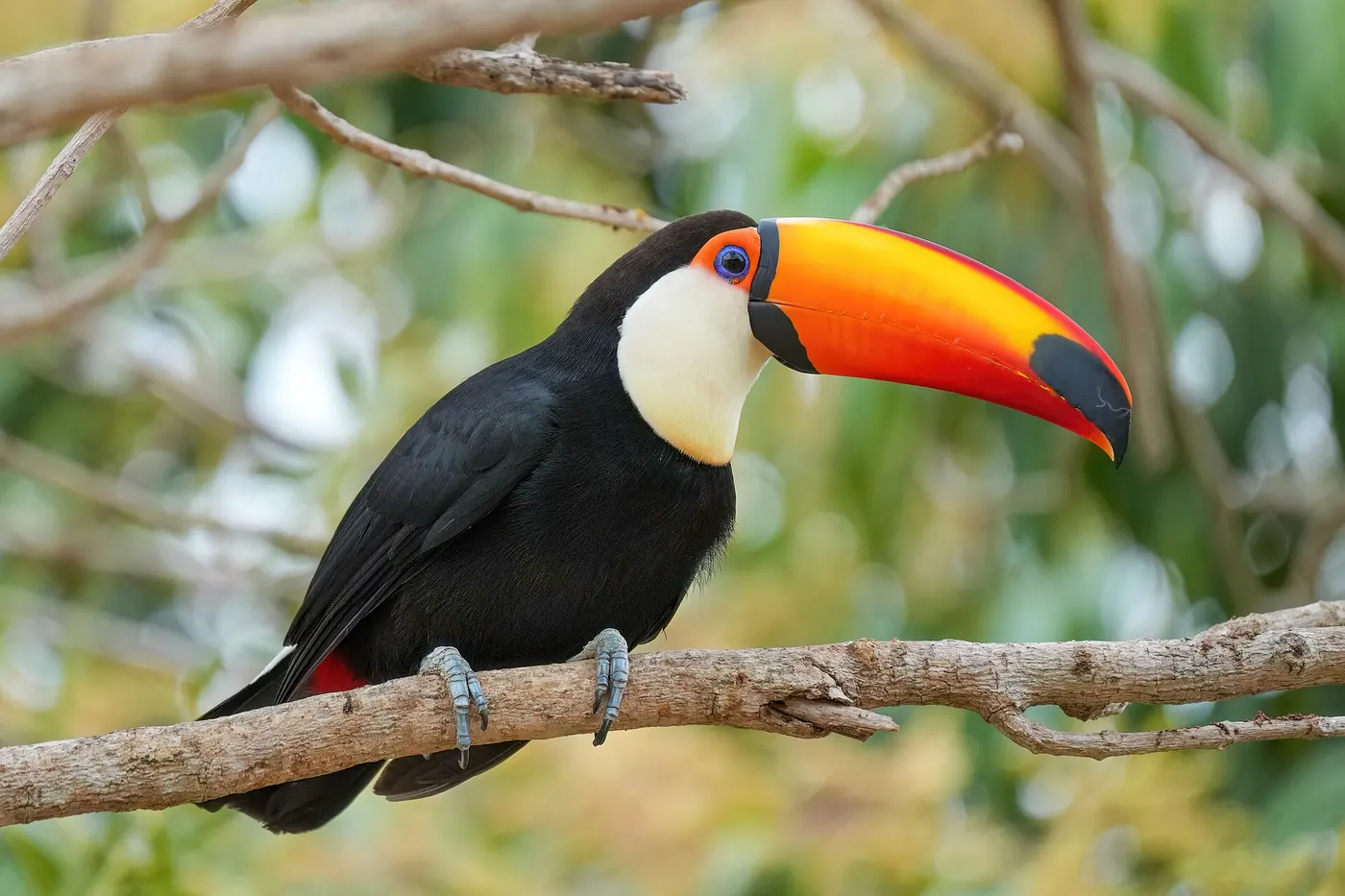
Both parks sit inside the Atlantic Forest, and the falls are only half the show. Look up and you may spot toucans with their absurd, beautiful bills; the air flickers with butterflies in colours that don't seem real, and they'll happily land on a bright shirt or a sweaty arm. There are monkeys, lizards, hundreds of bird species, and if you're very lucky and very quiet, far rarer residents deeper in the forest.
But the animal you will meet, guaranteed, is the coati, a long-snouted, ring-tailed relative of the raccoon that patrols the walkways and snack areas with the confidence of a creature that has read your guidebook. They are adorable. They are also wild, food-motivated, and equipped with claws and teeth.
Do not feed them, and don't eat in the open with food in hand, they will snatch it, and a startled coati can scratch or bite. Keep food zipped away, admire them from a respectful distance, and let them stay wild. Feeding them is bad for them and occasionally painful for you.

Insider tip
Want to eat in peace? Sit at an enclosed café table rather than an open bench, keep your bag on your lap, and never photograph yourself holding food near a coati, that's exactly the moment they make their move. Treat them like clever street-smart toddlers with claws and you'll both have a lovely day.
What most visitors miss nearby
The falls are the headline, but the region around Foz do Iguaçu hides some genuine treasures that most rushed travelers skip, and shouldn't.
Itaipu Dam
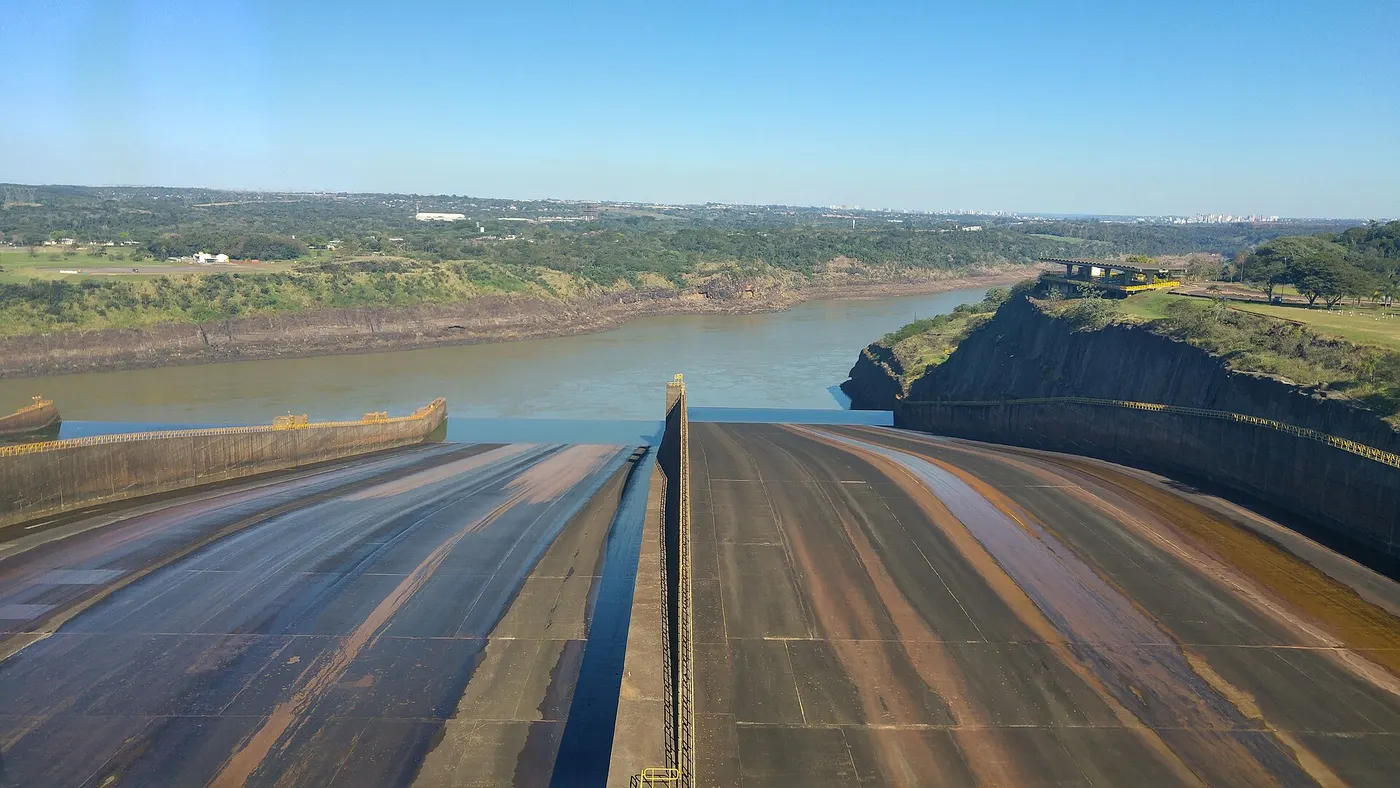
Just outside the city sits the Itaipu Dam, one of the largest hydroelectric power stations on the planet, built jointly by Brazil and Paraguay on the Paraná River.
It's a staggering piece of engineering, long associated with record-breaking electricity generation, and the contrast is poetic: in the morning you stand before water shaped by nothing but gravity and a million years, and in the afternoon before water bent to human will on a colossal scale. Guided visits let you see the dam up close, and on select evenings there are illuminated viewings worth timing your day around.
The Triple Frontier
This is one of the few places on Earth where you can stand and see three countries at once. At the Marco das Três Fronteiras, the Iguaçu River meets the Paraná, and the confluence marks the meeting point of Brazil, Argentina, and Paraguay. Each country has its own marker on its own bank. It's a quietly thrilling bit of geography, especially at sunset, and a great photo most visitors never bother to get.
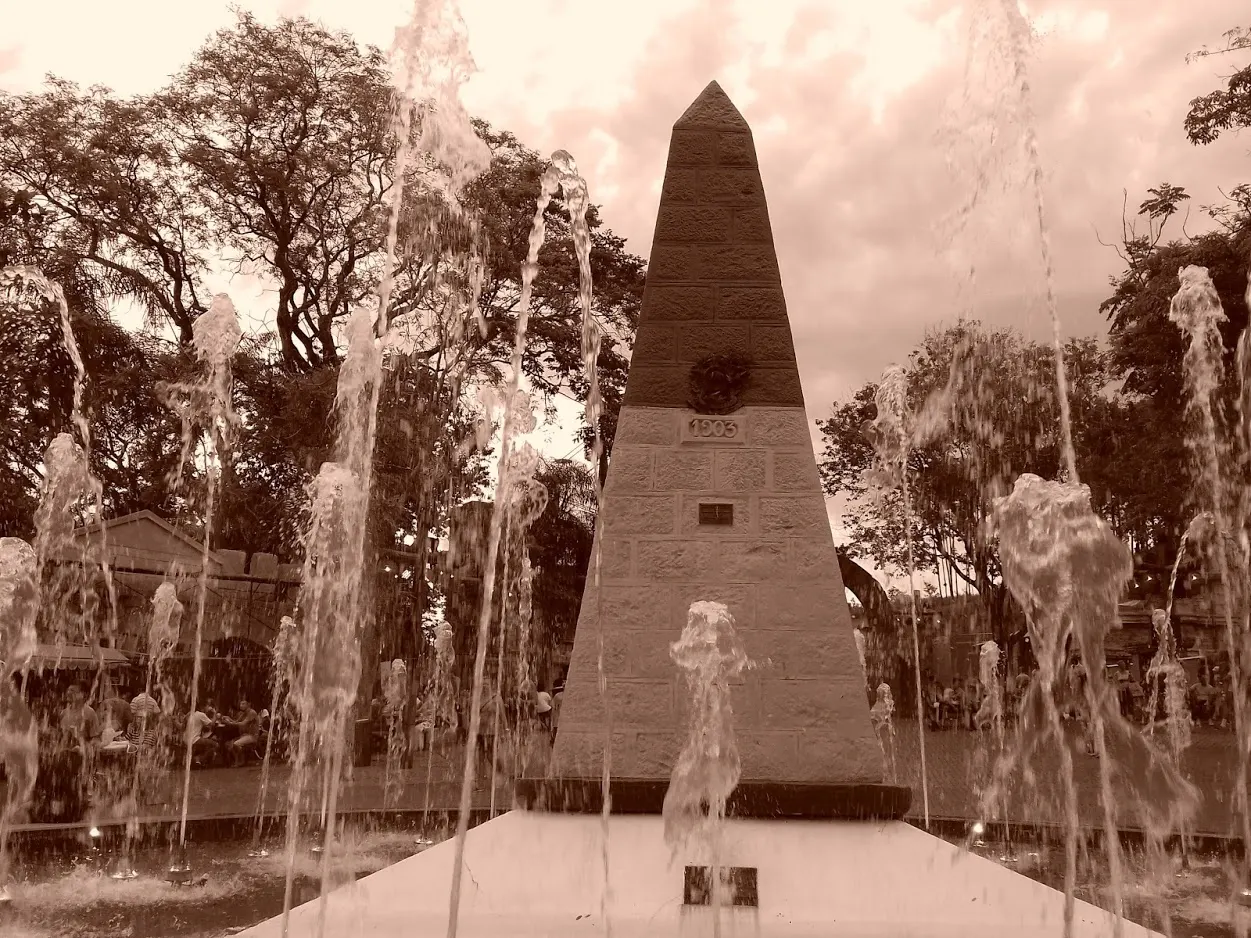
Parque das Aves
Right next to the entrance of the Brazilian national park is Parque das Aves, a bird park focused on the species of the Atlantic Forest, with large walk-through aviaries where toucans and parrots move freely around you. It's a lovely, gentle complement to the falls, especially good with kids or as a calmer counterpoint after a big day of walking, and an easy add-on to a Brazilian-side morning.
The boat ride: getting properly drenched
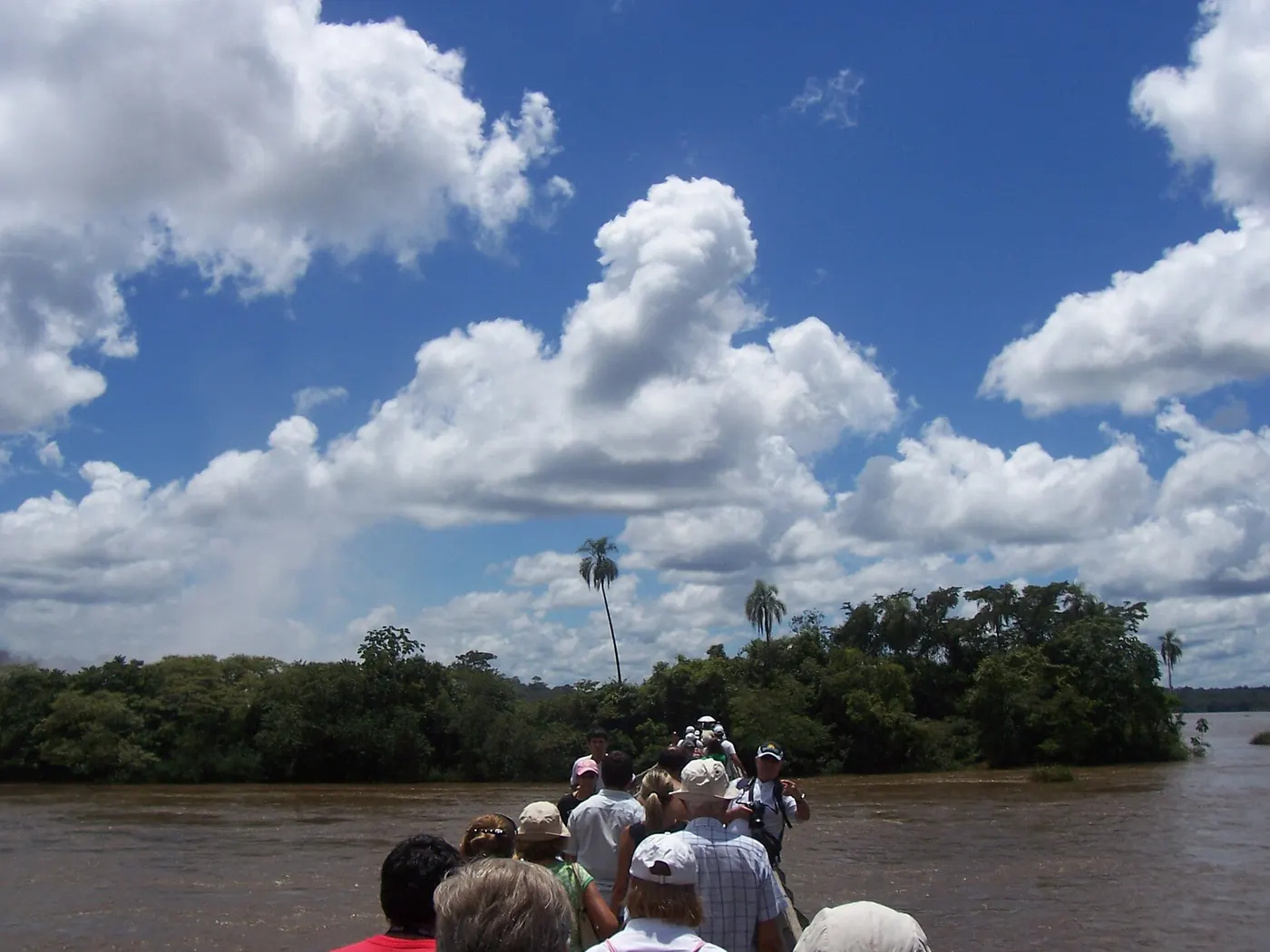
If your idea of a good time involves a speedboat charging straight toward the base of a waterfall until you can't see for the spray, both parks offer boat rides into the falls, and they are riotous fun. You will be soaked to the skin, wear a swimsuit underneath, stow everything in the dry bags they provide, and surrender to it.
The combination of the noise, the cold water, and the sheer scale looming overhead is something most people remember for the rest of their lives. It's optional, it's intense, and I've never met anyone who did it and regretted it.
Best time to visit Iguazu
Iguazu is spectacular year-round, but the experience shifts with the seasons and the river. After heavy rains the falls swell into a brown, furious torrent of unimaginable volume, overwhelming and magnificent, though the spray can be so thick it sometimes veils the views and closes the Devil's Throat walkway temporarily. In drier spells the water runs lower and clearer, individual cascades separate out beautifully, and the views are crisp, though in a serious drought the flow can drop noticeably.
The region is hot and humid in the southern-hemisphere summer (roughly December to February) and milder in winter (June to August). For comfortable walking weather and reliably strong-but-not-overwhelming flow, the shoulder seasons are a sweet spot. For a fuller picture of how Brazil's seasons play out region by region, see our guide to the best time to visit Brazil. Whatever the month, the crowd-beating advice never changes: go early.
How Iguazu fits your bigger Brazil trip
Few travelers fly all the way to South America just for the falls, glorious as they are, and you shouldn't have to. Iguazu connects easily to the rest of the country, which makes it one of my favourite anchors for a route. Pair it with Rio for beaches, samba, and the icons; many of our guests bookend a falls visit with our Rio day tours and a stop at Christ the Redeemer.
Foodies will want to read up on the Brazilian dishes to try before they go. And if safety is on your mind, our honest take on whether Brazil is safe for tourists is a good, calming read.
Because we're a local team based in Rio, we build these routes the way we'd travel them ourselves, sensible pacing, the right side of the border on the right day, and the early starts that make all the difference. When you're ready to turn "Brazil or Argentina" into an actual plan, that's where we come in. Have a look at the wider list of destinations we cover, or just tell us your dates.
Key takeaways
- Brazil = panorama, half a day. One stunning trail and the famous wide view of the whole falls.
- Argentina = immersion, full day. Long trails, walkways over the water, and the mighty Garganta do Diabo.
- Do both if you possibly can, two days and a night is the ideal, with a passport every day for the border.
- Go early for empty boardwalks, soft light, and morning rainbows; pack waterproofs.
- Don't feed the coatis, and leave time for Itaipu Dam, the Triple Frontier, and Parque das Aves.
Ready to see the "big water" for yourself? Let's pick your dates and build a Brazil trip with Iguazu at its heart.
Plan my trip on WhatsAppImage credits: Dennis G. Jarvis / CC BY-SA 2.0, via Wikimedia Commons; Martin St-Amant / CC BY 3.0, via Wikimedia Commons; Leandro Kibisz / CC BY-SA 3.0, via Wikimedia Commons; dany13 / CC BY 2.0, via Wikimedia Commons; Giles Laurent / CC BY-SA 4.0, via Wikimedia Commons; Gabriel Resende Veiga / CC BY-SA 4.0, via Wikimedia Commons; Claiton Luis Moraes / CC BY-SA 4.0, via Wikimedia Commons. Other photos via Unsplash or in the public domain.