Trip in
 There is a moment, somewhere around the second hour inside the Sambadrome, when your body stops being yours. The drums of the bateria hit a wall of sound so physical it rearranges your ribcage, ten thousand strangers are singing the same chorus they only learned three weeks ago, and a sixty-foot float shaped like a flaming phoenix rolls past close enough to feel its heat.
That is Rio Carnival, not a parade you watch, but a tide you get swept into. And here's the secret most visitors never grasp: the spectacle in the stadium is only half the story. The other half is happening at seven in the morning, out on a side street in Botafogo, where a few hundred people in glitter are dancing to a brass band before the heat arrives.
I've guided travelers through this city's wildest week more times than I can count, and the question I hear most is simply: how does it actually work? So let me walk you through it the way I'd walk a friend, the history, the machinery, the etiquette, and exactly where to stand when the magic happens.
When is Rio Carnival? The dates that move every year
Here's the first thing that trips people up: Carnival has no fixed date. It is a movable feast, pinned to the church calendar rather than the regular one. Carnival is the riotous farewell to indulgence right before Lent, the forty-day period of fasting that Catholics observe leading up to Easter. Because Easter itself moves, so does Carnival.
The official run goes from the Friday before Ash Wednesday through to Ash Wednesday morning, with the climax falling on the Sunday and Monday nights. The grand finale, the Desfile das Campeãs (Parade of Champions), happens the following Saturday, and frankly, it's one of the best-kept tips in town, but more on that later. In practice it tends to land in February or early March. The smart move is to check the year you're traveling and book everything, flights, beds, parade tickets, months ahead, because Rio fills up like a bathtub.
Insider tip
The city doesn't switch off the instant Carnival "ends." Many street blocos run for two or three weekends before the official dates and a few stragglers after. If you want the energy without the absolute peak crowds and prices, aim for the pre-Carnival weekend, locals call this the warm-up, and it's gloriously uncrowded by comparison.
Not sure which week of Carnival to aim for, or how far ahead to book? We live here and plan it every year, let's sort your dates.
Plan my trip on WhatsAppThe story behind it: from Portuguese mud-throwing to the world's greatest party
Carnival did not arrive in Rio fully formed and feathered. Its oldest root is a rowdy Portuguese tradition called the entrudo, brought over in colonial times, a pre-Lenten free-for-all where people drenched one another with water, flour, and worse. It was chaotic, often genuinely dangerous, and the authorities spent decades trying to ban it. But the impulse behind it, one last collective explosion before the austerity of Lent, never died. It simply evolved.
Through the nineteenth century, that raw street energy blended with two other currents: the elegant masked balls of the European elite, and, most importantly, the music and rhythm carried by Afro-Brazilian communities, many descended from enslaved Africans. In the working-class neighbourhoods and hillside communities of Rio, a new sound was being forged, samba, and with it, a new way to celebrate.
The true turning point came in the late 1920s. In 1928, a group in the Estácio neighbourhood founded what is widely regarded as the first escola de samba (samba school): Deixa Falar. The idea caught fire. Soon came the giants that still parade today, Mangueira and Portela among the earliest and most storied. These weren't schools in the academic sense; the name stuck partly because the original group rehearsed near a teachers' training college. They were, and remain, community institutions, neighbourhood pride made flesh, run year-round by thousands of volunteers and members.
Carnival is the only week of the year when the whole city agrees to dream the same dream out loud.
What began as informal neighbourhood processions grew into the organised, fiercely competitive parade we know today. The samba schools turned celebration into an art form with rules, judges, and stakes high enough to break hearts. For the deeper cultural backdrop, and why Rio feels the way it does the rest of the year, our guide to things to do in Rio de Janeiro is a good companion read.
The two Carnivals: the Sambadrome vs the streets
This is the single most useful thing to understand before you arrive. Rio Carnival runs on two parallel tracks, and many first-timers don't realise they're different events with completely different vibes.
1. The Sambadrome parades (the competition)
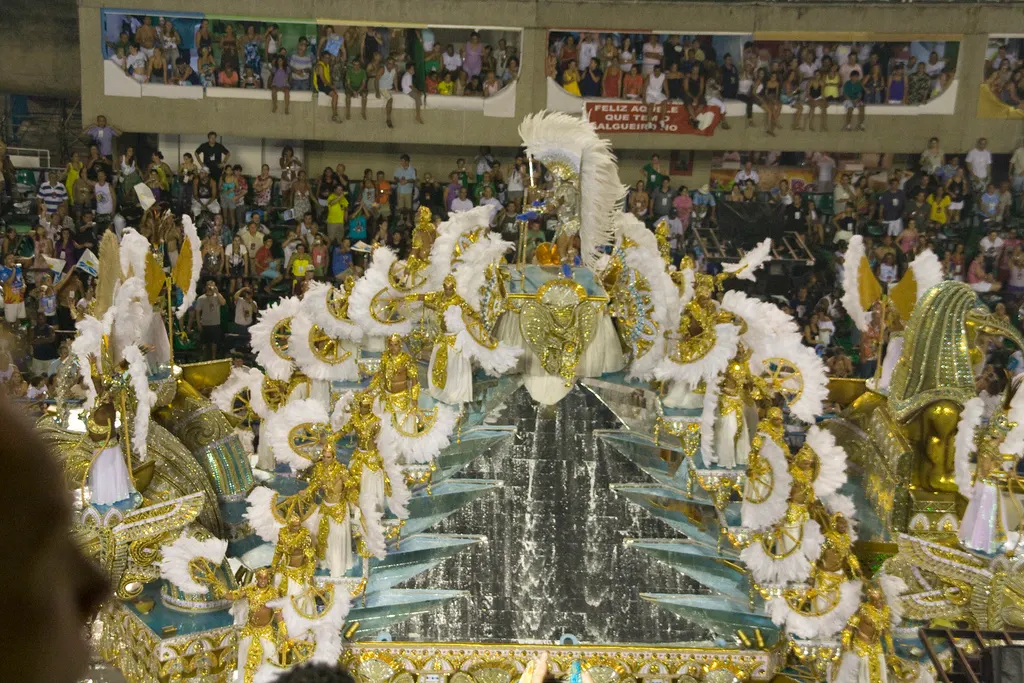
This is the ticketed, televised, world-famous spectacle, the elite samba schools competing for the championship. It is organised, ferociously rehearsed, and breathtaking. You buy a seat (or a spot in the standing sections, or a box called a frisa or camarote) and you watch the best schools parade one after another through the night. Think of it as the World Cup final of samba.
2. The blocos de rua (the street parties)
This is the free, anarchic, joyously democratic side of Carnival. Blocos are street bands that gather a crowd and move (or sometimes just stay put) through a neighbourhood, playing samba, marchinhas, and brass-band classics. There are hundreds of them across the city, from tiny gatherings of fifty friends to monster blocos that draw hundreds of thousands. They cost nothing, require no ticket, and are where most cariocas, the people of Rio, actually spend their Carnival.
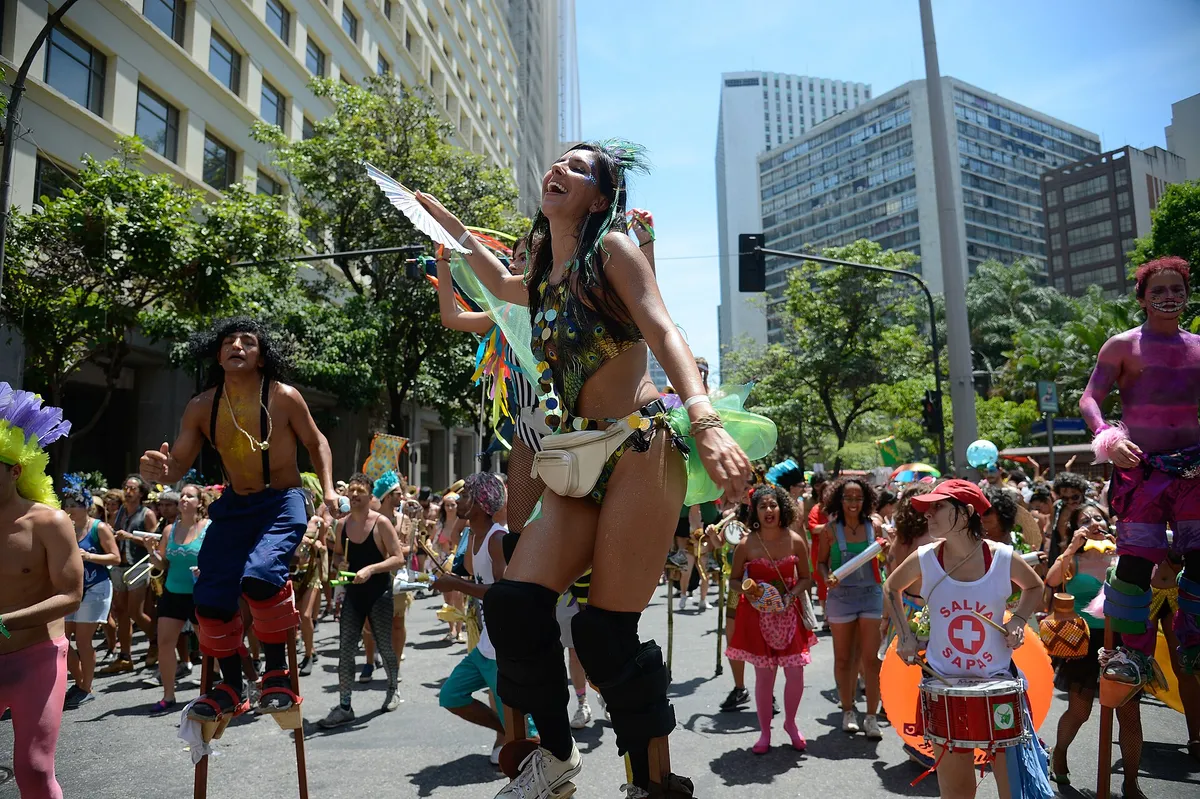
My honest advice? Do both. The Sambadrome to have your jaw on the floor; the blocos to feel Carnival in your own feet. They are two halves of one heart.
Insider tip
If you only have energy for one Sambadrome night, the schools that parade on the main competition nights (Sunday and Monday) are the top division, the spectacle peaks then. But the Parade of Champions the following Saturday brings back only the winning schools, the crowds are thinner, tickets are easier, and you see the very best performances refined. It's the connoisseur's choice.
How a Sambadrome parade is judged: the anatomy of a samba school
Once you understand what the judges are scoring, the parade transforms from a blur of colour into a thrilling, readable competition. Each school gets a strict time window to pour its entire being down the runway, and a panel grades it across multiple categories. Here are the pieces to watch for.
The enredo and samba-enredo
Every school builds its parade around a single theme, the enredo. It might be a slice of Brazilian history, a tribute to an artist, an Indigenous legend, or a burning social issue. The theme is expressed through the samba-enredo, the school's original song for the year, composed and chosen months in advance. By Carnival night, every member, and most of the crowd, knows it by heart. Learn the chorus beforehand and you'll feel ten times more part of it.
The bateria
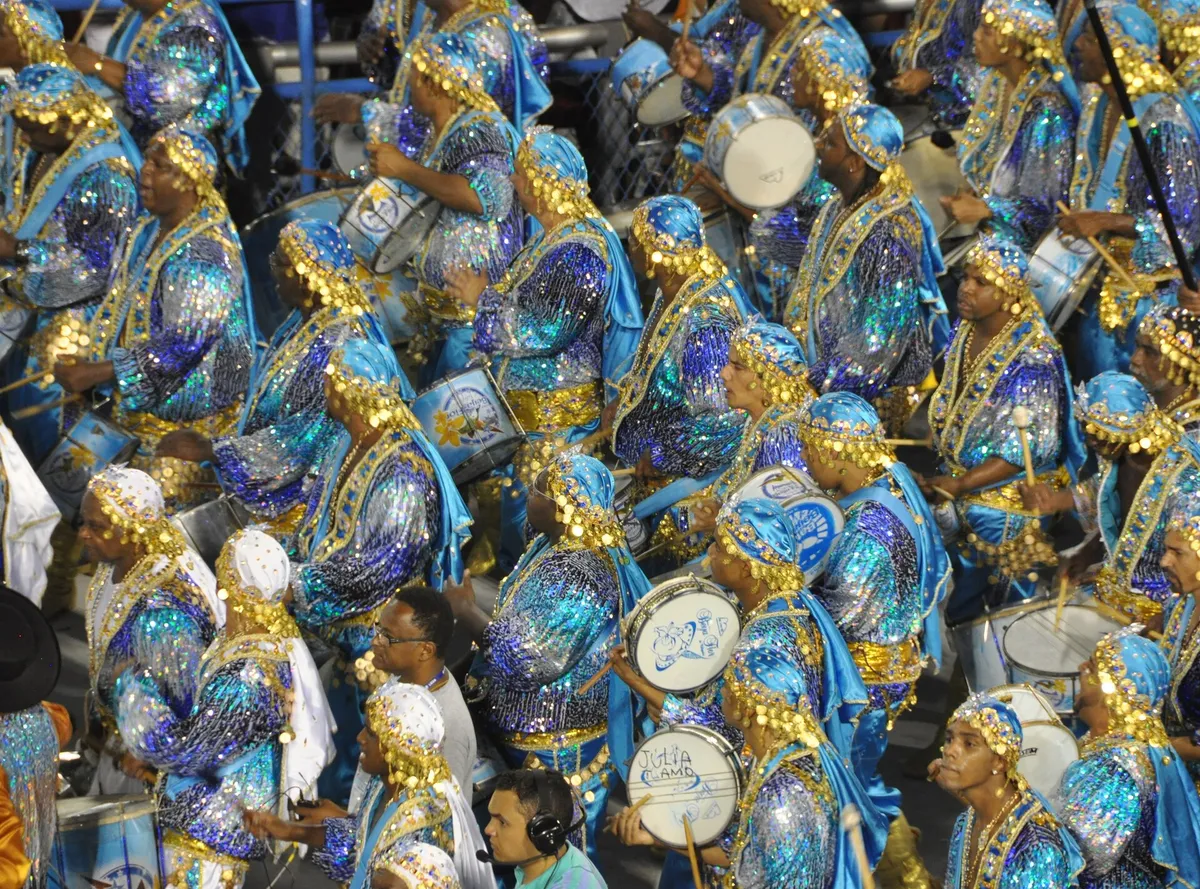
The percussion section, the bateria, can number in the hundreds of drummers, surdos, tamborims, repiniques, agogôs, all locked into one colossal groove led by a conductor. When the bateria passes your seat, you don't hear it so much as wear it. It is, for my money, the most physically overwhelming sound in popular music.
The alas and the costumes
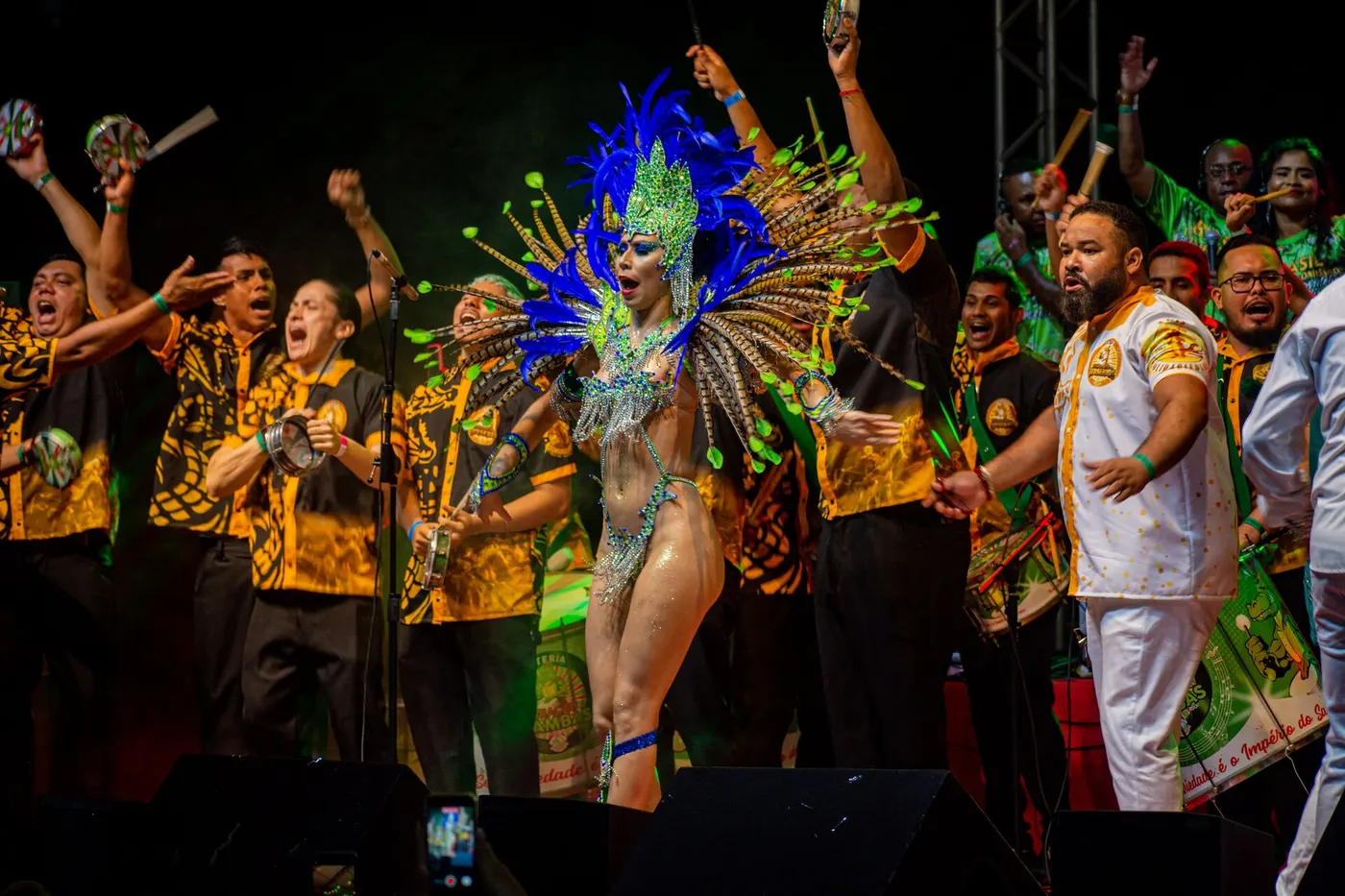
A school marches in alas, wings, or thematic groups, each in matching costume telling part of the story. A single school can field thousands of paraders across dozens of alas. Threaded among them are the stars: the passistas (the dazzling solo dancers), the porta-bandeira and mestre-sala (the flag-bearer and her elegant partner, whose graceful duet is its own judged category), and the destaques (showcase figures in the most extravagant costumes of all).
The carros alegóricos
The carros alegóricos, allegorical floats, are the rolling cathedrals of Carnival: enormous mechanised sculptures, often several storeys tall, carrying performers and bringing the theme to life. They are designed and built over an entire year by an army of artisans. Watching one round the curve into the avenue is pure theatre.
The judges weigh all of this, theme, song, drums, dancing, costumes, floats, overall harmony, and whether the school keeps to its time. Points are tallied, a champion is crowned, and a school that finishes last in the top division can be relegated, just like a football team. The stakes are real, and the tears, of joy and heartbreak, are too.
Want help choosing the right Sambadrome night, the right section, and a samba school worth rooting for? We'll match it to your trip.
Plan my trip on WhatsAppThe Sambódromo: Niemeyer's concrete masterpiece on the Sapucaí
For decades, the schools paraded on ordinary city avenues, with temporary stands hauled up and torn down each year. Then, in 1984, Rio gave Carnival a permanent home. The Sambódromo, officially the Passarela Professor Darcy Ribeiro, but known to everyone by the avenue it sits on, the Marquês de Sapucaí, was designed by the legendary Brazilian modernist architect Oscar Niemeyer, the same visionary behind the capital city of Brasília.
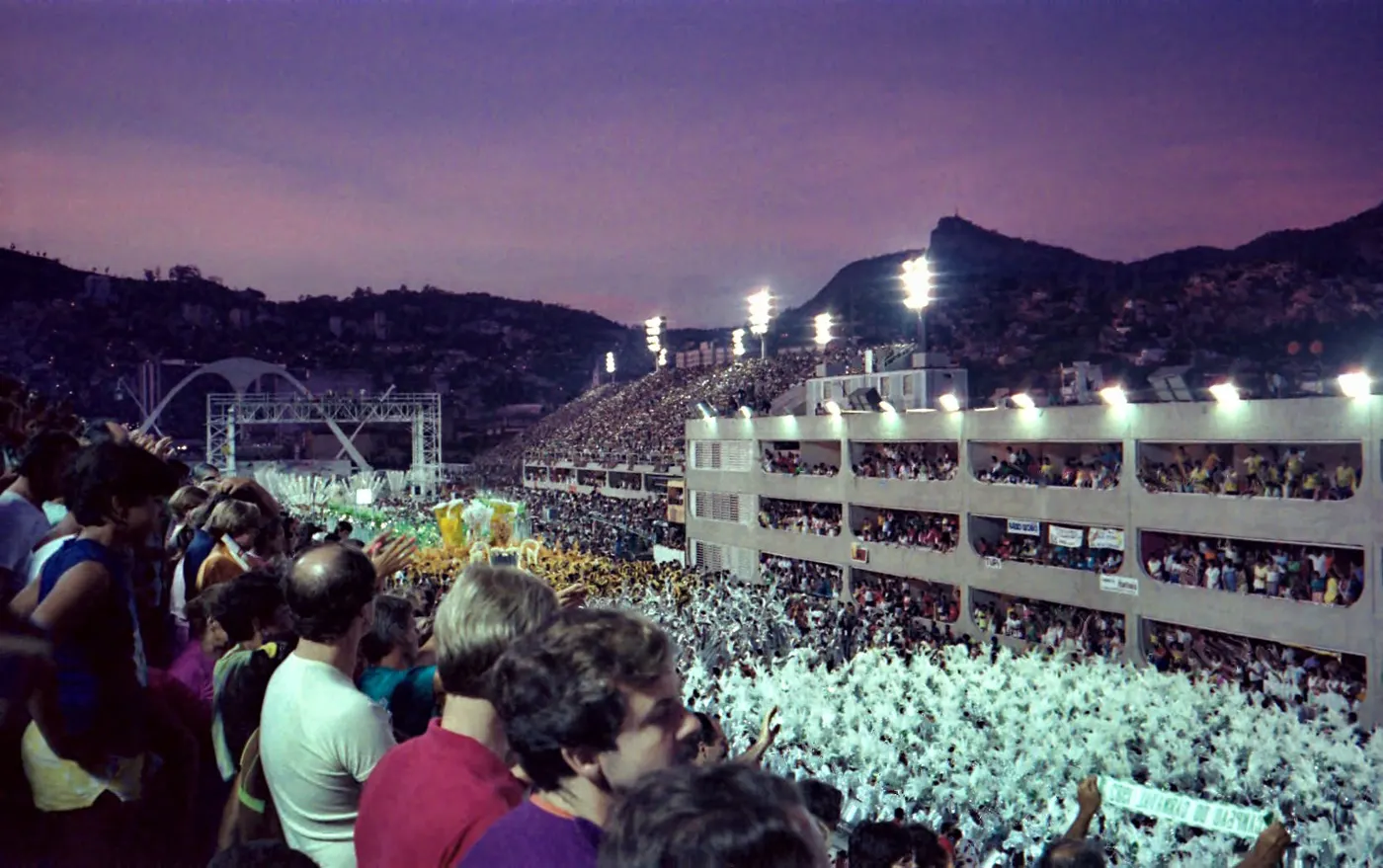
It's a strikingly simple, brilliant idea: a long parade avenue flanked by tiered concrete grandstands, so the public always has somewhere to sit and the schools always have their stage. Cariocas simply call the whole experience "the Sapucaí," and to parade there is the dream of a lifetime for the tens of thousands who do it. Did you know? Outside of Carnival the Sambódromo doesn't sit idle, its grandstands are used for concerts, events, and it even serves civic purposes the rest of the year.
Insider tip
Sectors near the middle of the avenue (the higher-numbered ones around the centre) tend to catch the schools at full, warmed-up energy, they've found their rhythm by then but aren't yet drained. The arquibancada (grandstand bleachers) are the most atmospheric and affordable; the boxed frisas down at avenue level put you almost close enough to touch the feathers. Bring water, wear something you can dance in, and pace yourself, nights run until sunrise.
What most visitors miss: the dawn blocos and the old guard
If you take one piece of advice from a local guide, take this one. The blocos that the tour buses know are the giant, packed daytime monsters, fun, but heaving. The Carnival that locals treasure happens at the edges: the early-morning blocos that start at six or seven a.m., when the light is gold, the air is cool, and the crowd is smaller, sweeter, and more in love with the music than the spectacle.

Then there are the old-guard blocos steeped in history. The Cordão da Bola Preta, founded in 1918, is among the oldest still going, its revellers traditionally dress in black-and-white polka dots and flood the city centre. Parading with Bola Preta is like stepping into a living photograph of Rio's past. Seek out the smaller, neighbourhood blocos in Santa Teresa, the bohemian hillside district, where the cobbled streets and tram tracks turn the party intimate and storybook-pretty.
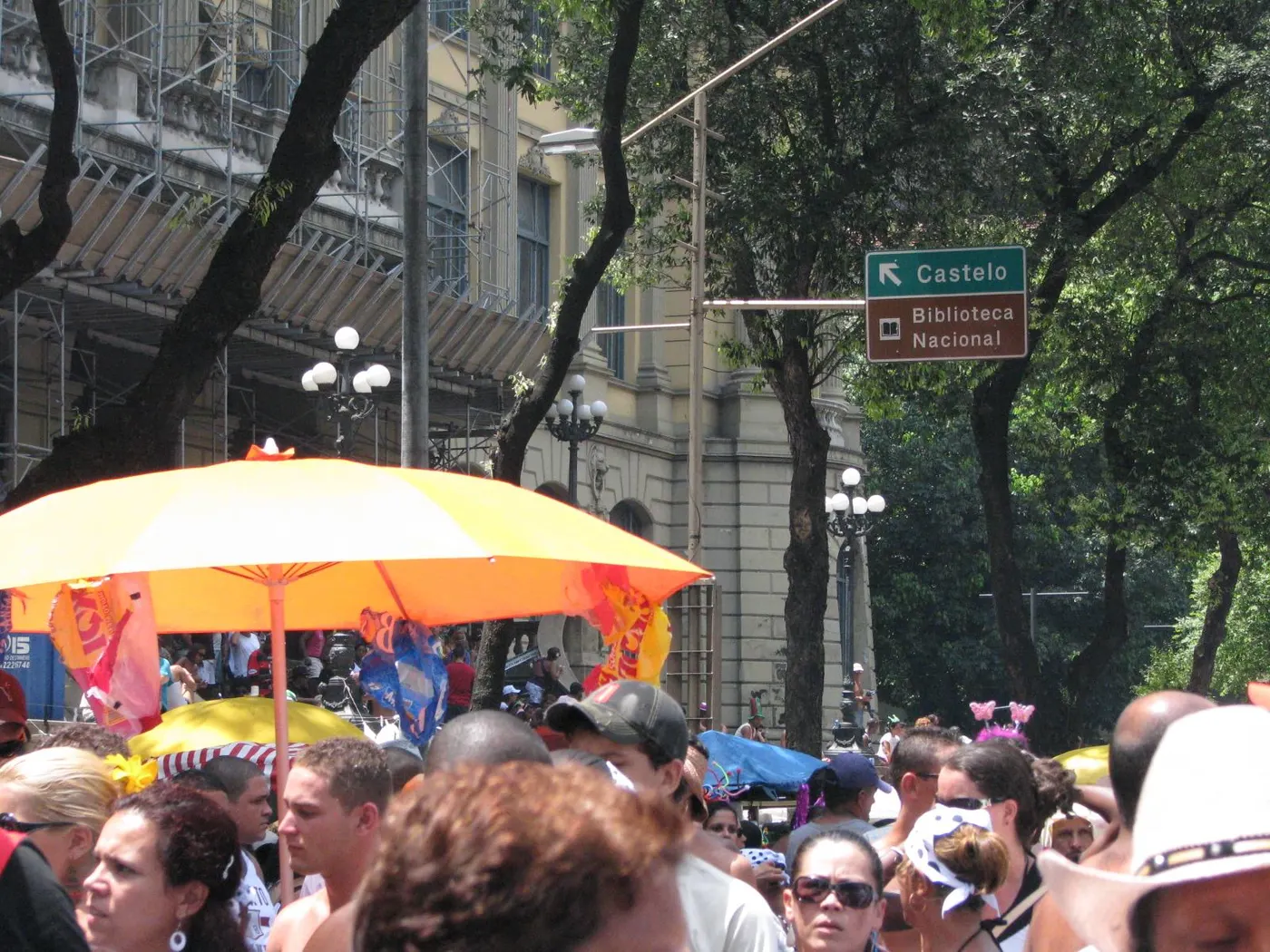
Did you know? The number of street blocos in Rio surged in the early 2000s and hundreds now register with the city each year, a grassroots revival that has, in many ways, returned Carnival to its democratic, anyone-can-join roots.
Behind the scenes all year: ensaios and the Cidade do Samba
Here's something that surprises every visitor: Carnival is not a week-long event. It's a year-round endeavour. The moment one Carnival ends, the schools begin building the next. They hold open rehearsals, ensaios, in their community halls (the quadras) throughout the year, and these are some of the most joyful, authentic, and least touristy nights you can have in Rio. You'll be dancing shoulder to shoulder with the actual community members who'll parade in February. Visiting a quadra months before Carnival is, honestly, one of my favourite recommendations.
And then there's the Cidade do Samba, the "City of Samba", a complex of giant warehouses near the port where the top schools design and construct their floats and costumes. Walking through it, you see the staggering scale of the operation: welders, sculptors, seamstresses, and electricians turning a year's imagination into reality. It's open to visitors and offers a glimpse of the craft most people never connect to the glittering night.
Local culture and etiquette: how to celebrate like a respectful insider
Carnival is welcoming to its bones, strangers will pull you into the dance, share their snacks, and teach you the chorus. But there's a way to belong rather than just gawk, and cariocas notice.
- Wear a costume, a fantasia. You do not need anything elaborate. A wig, glitter on your cheeks, a silly hat, a feather boa from a street stall, anything counts. Showing up "in costume," however minimal, signals you came to play, not just to film. Locals respect that enormously.
- Learn a chorus or two. The marchinhas (old comic Carnival marches) and the year's samba-enredo are sung by everyone. Even botching the Portuguese with a grin earns you instant friends.
- Mind your consent and your space. Carnival is flirtatious and physical, but "no" means no, always. The famous beijo (kiss) culture is real, but it's never an obligation, and a polite "não, obrigado/obrigada" is completely respected.
- Look after the city. Use the portable toilets, bin your cans, and be kind to the residents whose doorstep is hosting the party.
- Tip and support local vendors. The folks selling cold drinks and snacks from coolers are part of the magic, buy from them.
Insider tip
Carry as little as possible: a little cash, a copy of your ID rather than the original, and your phone in a zipped or cross-body pouch. Wear closed shoes you don't love, streets get crowded and messy. Stay hydrated between the beers; the February heat is no joke.
Staying safe, cool, and crowd-smart
Carnival is overwhelmingly joyful, but it is also a massive crowd event in a big city, and a little common sense goes a long way. Petty theft (pickpocketing) is the main thing to guard against, keep valuables minimal and zipped away, and stay aware in the densest crushes. Drink water, find shade, and don't try to do a 7 a.m.
bloco and an all-night Sambadrome session on the same day unless you've trained for it. For a calm, practical overview, see our honest take on whether Brazil is safe for tourists, it'll set your expectations exactly right.
On timing and weather more broadly: Carnival falls in the heart of the Brazilian summer, which is hot, humid, and prone to dramatic afternoon downpours. If you're weighing when to come to Brazil at all, our guide to the best time to visit Brazil lays out the trade-offs season by season.
Practical logistics: getting there, getting around, and accessibility
During Carnival, central Rio and the parade zones become a maze of road closures and surging crowds, so driving is a non-starter. The metrô (subway) is your best friend, it typically runs extended hours during Carnival and is the sanest way to reach the Sambódromo and the major bloco areas. Plan to walk the last stretch almost everywhere.
A few practicalities worth knowing:
- Book accommodation early and consider staying in Copacabana, Ipanema, Botafogo, or Flamengo for good metrô access and a strong bloco scene nearby.
- Sambódromo tickets come in many tiers, grandstand, frisas, camarotes, and tourist sectors. Buy through reputable channels well in advance and beware of street resellers.
- Blocos are free, but the popular ones get extremely dense, arrive early, agree a meeting point with your group, and don't rely on phone signal in the crush.
On accessibility: the Sambódromo does include designated accessible seating areas, and Carnival can absolutely be experienced by travelers with reduced mobility, but the right setup depends entirely on your specific needs, and crowd levels vary enormously between events. We never make blanket promises; everything is confirmed per traveler in advance so there are no surprises on the night. If this matters for your trip, our work in accessible travel and our deeper guide to an accessible trip to Brazil are the place to start.
Carnival pairs beautifully with the rest of Rio's icons. Most visitors fold it into a few days that also include Christ the Redeemer and the city's beaches and viewpoints, often via our private Rio day tours. And if Carnival is the centrepiece of a longer journey, see how it slots into a 2-week Brazil itinerary, or browse the wider destinations for ideas on where to head once the confetti settles.
Key takeaways
- Rio Carnival is a movable feast running Friday to Ash Wednesday, usually in February or early March, book everything months ahead.
- It runs on two tracks: the ticketed Sambadrome competition and the free street blocos. Do both.
- Parades are judged on theme (enredo), song (samba-enredo), drums (bateria), costumes, dancing, and floats, learn what to watch for.
- The deepest local magic is in the dawn blocos, the historic Cordão da Bola Preta, the year-round ensaios, and the Cidade do Samba.
- Wear a costume, learn a chorus, travel light, and use the metrô, that's how you do Carnival like an insider.
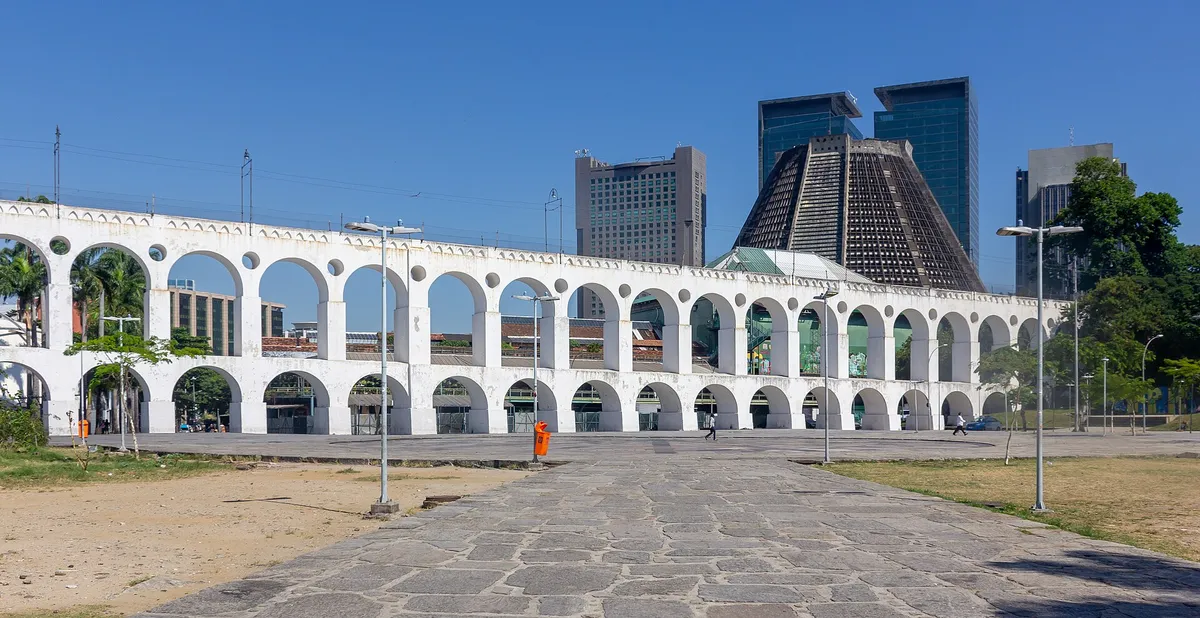
So come hungry for it. Come ready to be a little ridiculous, to sweat and sing and let a stranger spin you under the Lapa arches at two in the morning. Carnival doesn't ask you to be a spectator, it asks you to disappear into something bigger than yourself for a few impossible days. And when the drums finally fade on Ash Wednesday, you'll understand why cariocas already start counting down to the next one.
Ready to make Carnival the trip of a lifetime? Tell us your dates and we'll build the whole adventure around it.
Plan my trip on WhatsAppImage credits: Tim Fearn / CC BY-SA 3.0, via Wikimedia Commons; Agência Brasil / CC BY 2.0, via Wikimedia Commons; Maksuel Martins/Governo do Amapá / CC BY 3.0, via Wikimedia Commons; Brian Stacey / CC BY-SA 4.0, via Wikimedia Commons; Dan Lundberg / CC BY-SA 2.0, via Wikimedia Commons; NMaia / CC BY-SA 4.0, via Wikimedia Commons; OsvaldoROVE / CC BY 2.0, via Wikimedia Commons; Mike Peel / CC BY-SA 4.0, via Wikimedia Commons. Other photos via Unsplash or in the public domain.